

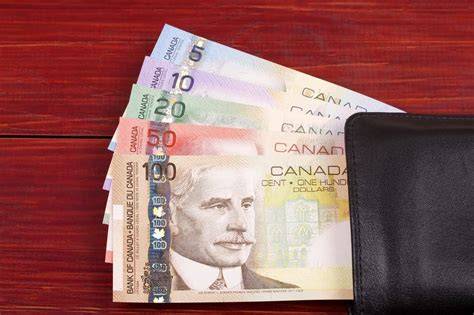
Ottawa (Rajeev Sharma): The Canadian dollar edged lower, capping a volatile week as investors balanced disappointing domestic retail data against a high-stakes U.S. Supreme Court decision that invalidated President Donald Trump’s broad emergency tariffs. The loonie fell 0.1% to trade at 1.3687 per U.S. dollar, ending a week that saw the currency lose 0.5% of its value. While a cooling inflation trend in Canada had already weakened the currency, a strengthening U.S. dollar and geopolitical uncertainty in the Middle East further pressured the exchange rate.
A major driver of market sentiment was the U.S. Supreme Court’s 6-3 ruling, which struck down the “reciprocal” tariffs imposed under the International Emergency Economic Powers Act (IEEPA). The court ruled that the President exceeded his executive authority by using national emergency laws to bypass Congress’s power to set trade policy. Despite this judicial setback for the Trump administration, economists at RBC noted that the impact on Canada remains limited. Most Canadian exports were already exempt from the IEEPA-based levies, and specific duties on steel, aluminum, and lumber—justified under different national security laws—remain firmly in place.
On the domestic front, fresh data from Statistics Canada showed that retail sales contracted by 0.4% in December, primarily due to a slowdown in the automotive sector. While a preliminary estimate for January suggests a robust 1.5% rebound, the year-end slump underscored the ongoing pressure on Canadian households. BMO Capital Markets analysts indicated that while consumer spending is “holding in,” the recovery remains uneven. Adding to the loonie’s woes, oil prices—a vital export for Canada—slipped slightly to $66.39 per barrel as traders waited to see if escalating U.S. military tensions with Iran would materialize into direct action over the coming week.
As the week closed, Canadian government bond yields followed a downward trajectory, with the 10-year yield hitting its lowest point since early December. The combination of domestic economic headwinds and a defiant U.S. trade policy—highlighted by President Trump’s immediate announcement of a new 10% global tariff following the court ruling—suggests a continued period of turbulence for the Canadian dollar as it heads into the final week of February.
