

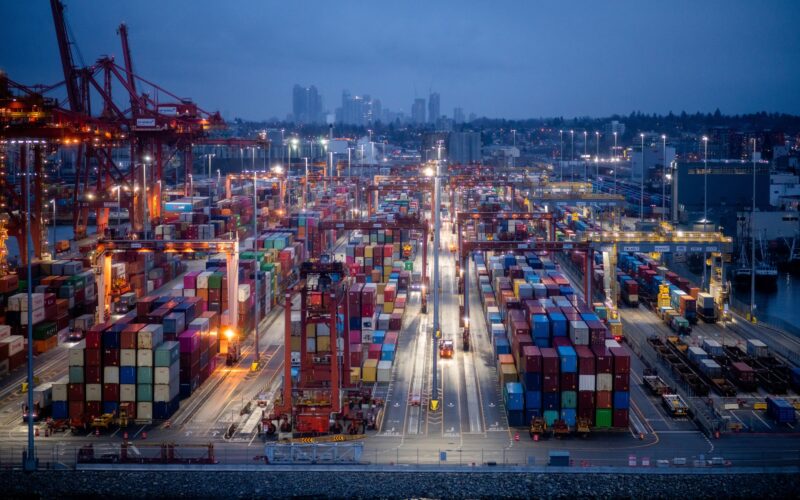
Ottawa (Rajeev Sharma) — Canada’s merchandise trade deficit widened significantly to C$3.65 billion in January 2026, far exceeding the C$900 million gap analysts had forecasted. According to data released by Statistics Canada on Thursday, March 12, the deficit nearly tripled from December’s revised C$1.3 billion, marking the largest percentage decline in exports in nearly a year.
The primary driver behind the widening gap was a sharp 21.2% plunge in the export of motor vehicles and parts, which hit its lowest level since September 2021. Officials attributed the decline to “prolonged seasonal production stoppages” as Canadian plants underwent extensive retooling for new models.
Key Trade Indicators (January 2026)
| Metric | Value | Monthly Change |
| Total Exports | C$62.5 Billion | -4.7% |
| Total Imports | C$66.1 Billion | -1.1% |
| Trade Deficit | C$3.65 Billion | +C$2.35 Billion |
| U.S. Trade Surplus | C$5.4 Billion | -C$300 Million |
Sector Performance and Regional Shifts
- Automotive Slump: Beyond the 21.2% drop in vehicles, exports of passenger cars and light trucks specifically plummeted by 32.5%. This sector alone accounted for a significant portion of the overall export contraction.
- Gold and Metals: Exports of metal and non-metallic minerals fell 8%, largely due to a 12.6% drop in unwrought gold shipments to the United Kingdom.
- Energy Offset: A 4.1% rise in energy exports provided a minor cushion, driven by a 23.7% surge in natural gas shipments. Economists suggest the escalating conflict in West Asia may further boost energy export values in March.
- U.S. Relations: Canada’s trade surplus with its largest partner, the United States, narrowed to C$5.4 billion. While 68% of Canadian exports still head south, both imports and exports with the U.S. saw a decline in January.
Economic Outlook
The disappointing January figures suggest that the Canadian economy started 2026 on “shaky ground,” according to analysts at CIBC. With net trade tracking as a subtraction from Q1 GDP growth, much of the recovery now hinges on the normalization of the auto sector and the potential for higher crude oil prices to bolster the trade balance in the coming months.
