

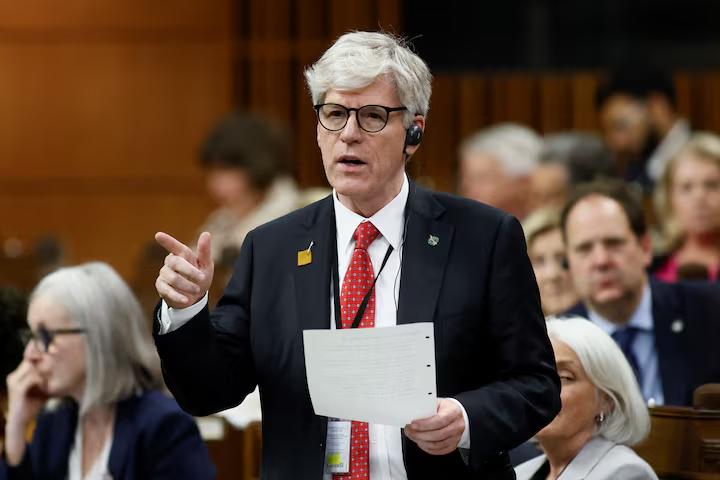
Ottawa (Rajeev Sharma) — The federal government is poised to release a definitive new electricity and nuclear strategy in the coming weeks, aiming to modernize the national power grid and cement Canada’s position as a global leader in clean energy. Minister of Energy and Natural Resources Tim Hodgson announced on Thursday, March 5, 2026, that the upcoming framework will provide a clear roadmap for achieving a net-zero emissions grid while addressing the surging demand for reliable, baseload power.
The strategy arrives at a critical juncture for Canadian energy policy. Earlier this week, during Prime Minister Mark Carney’s state visit to New Delhi, Canada secured a landmark $2.6 billion (C$3.5 billion) deal for the long-term supply of uranium to India. Minister Hodgson indicated that the new national strategy will build on such international partnerships, focusing heavily on the deployment of Small Modular Reactors (SMRs) and the modernization of the domestic CANDU nuclear fleet. By streamlining regulatory approvals and incentivizing private sector investment, Ottawa hopes to expedite the construction of new nuclear facilities that have faced decades of stagnation.
A primary driver for the new policy is the urgent need for grid reliability amidst growing global instability. With the ongoing conflict in the Middle East disrupting traditional oil and gas markets, the Canadian government is pivoting toward “always-on” non-emitting sources to safeguard the domestic economy from external price shocks. The strategy is expected to outline significant federal funding for provincial grid interconnections and long-duration energy storage projects, ensuring that intermittent renewables like wind and solar are backed by a robust nuclear and hydroelectric foundation.
Beyond domestic security, the government views this strategy as an economic engine. The plan emphasizes the development of a fully integrated North American supply chain for nuclear fuel and technology, aiming to reduce Western reliance on Russian and Chinese energy assets. Minister Hodgson noted that the transition to a carbon-free grid by 2035 remains a “formidable challenge” but insisted that the upcoming strategy provides the necessary tools for provinces to meet their climate goals without compromising on affordability or industrial competitiveness.
