

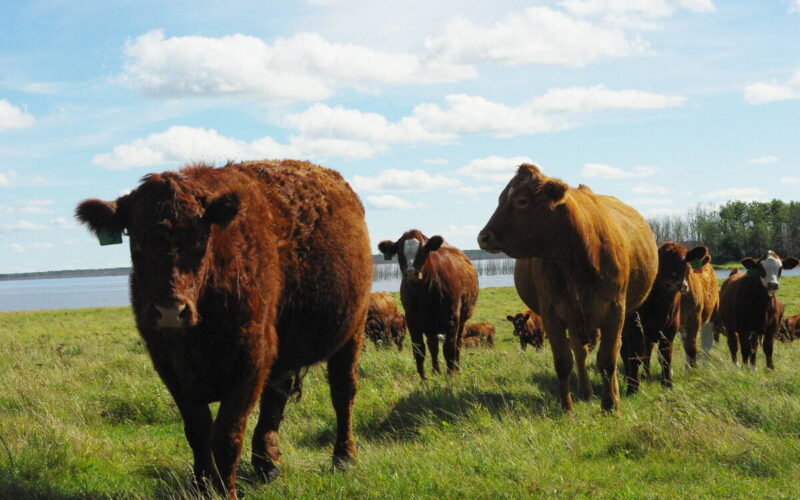
Calgary (Rajeev Sharma): Canada has resumed beef exports to China, ending a years-long suspension that had cut off a major overseas market and created challenges for producers, particularly in Alberta. The development comes at a crucial time, with national cattle supplies remaining tight and beef prices elevated.
China halted Canadian beef imports in late 2021 after an atypical case of bovine spongiform encephalopathy (BSE), commonly known as mad cow disease, was detected on an Alberta farm.
Producers say reopening the market is a welcome move amid global trade uncertainty.
“It’s always good news when a new market is made available to us,” said John Smith, who runs Plateau Cattle Co. near Nanton, Alta. “With the current geopolitical landscape and shifting tariffs, expanding market access worldwide is extremely important.”
At his ranch, Smith said most cattle are unaffected by international trade decisions in the short term, but those choices ultimately determine where Canadian beef ends up. Some of his livestock will be sold to large processors, with portions destined for international markets, including China.
According to Smith, China plays a key role by buying cuts that are less popular in the Canadian market, helping improve returns across the supply chain.
“Having a place for those cuts to go does nothing but improve the economics for cow-calf producers, feedlot operators and packers,” he said.
Before the ban, Canadian beef exports to China were valued at nearly $200 million annually. Industry officials believe exports could eventually return to those levels, though rebuilding market momentum will take time.
The Canadian Cattle Association says major processors could begin shipping beef to China within weeks, but limited cattle supply will restrict export volumes initially.
“We do have very tight cattle numbers in both Canada and the United States,” said Dennis Laycraft, the association’s executive vice president. “That will limit exports, but we are still moving significant quantities of beef and live cattle, which allows us to start rebuilding the market.”
Cattle herds across Canada have shrunk due to prolonged drought, forcing many producers to reduce operations. Smith said improved rainfall and herd recovery could allow demand from China to help stabilize beef prices.
“It’s probably going to hold prices where they are,” he said, adding that long-term stability is critical for producers planning future investments.
However, Smith cautioned that China’s history of abruptly suspending imports raises concerns about the market’s long-term reliability.
