

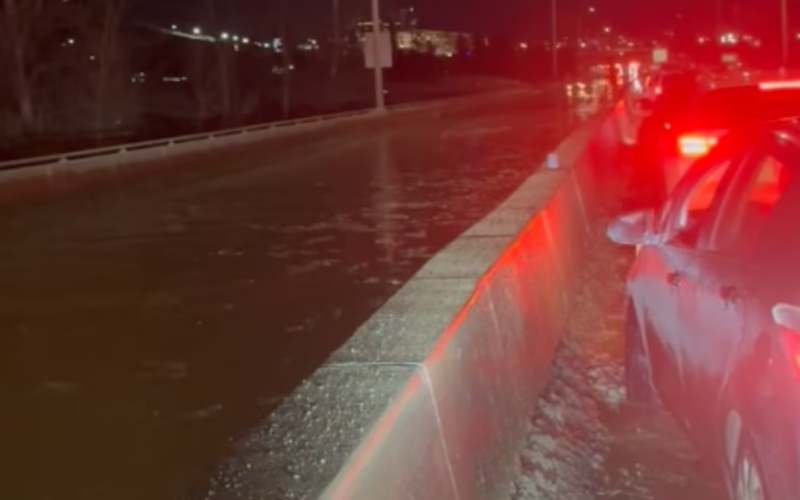
Calgary (Rajeev Sharma): Nearly a week after the Bearspaw feeder main ruptured for the second time, Calgary Mayor Jeromy Farkas has made it clear that water conservation measures will remain in effect until a brand-new water main is constructed, marking what could become the largest infrastructure project in the city’s history.
Speaking on Monday, Farkas said Calgarians can no longer afford to take water access for granted, describing the situation as a fundamental shift in how the city must manage its most vital resource. Emphasising public safety, he said residents deserve transparency about the scale of the problem and the road ahead.
City officials are currently focused on stabilising the immediate impact of the break, while simultaneously preparing for a full replacement of the main pipeline that carries a significant portion of Calgary’s water supply. Farkas compared the task to replacing the “beating heart” of the city’s water system, calling the existing pipe beyond repair.
As a result, residents are being asked to continue conserving water for the foreseeable future. The mayor acknowledged the inconvenience but stressed that small, consistent changes in daily habits would collectively make a significant difference. He added that city council is unified in its commitment to permanently resolve the issue within the current term, with a long-term solution designed to serve Calgary for generations.
Despite repeated calls for conservation, water usage rose on Sunday, with the city recording consumption of 510 million litres over 24 hours—exceeding the amount needed to restore water reserves. Calgary Emergency Management Agency chief Sue Henry warned that excessive use places strain on treatment plants, underground storage and the city’s ability to distribute water where it is most urgently needed.
Henry urged residents to limit showers to under three minutes, reduce toilet flushing, and run dishwashers and washing machines only when fully loaded. She said conservation is critical to ensuring water availability for emergencies such as firefighting, noting that a single major fire can consume millions of litres and significantly deplete storage levels.
The damaged section of the Bearspaw feeder main has now been removed and will be examined at a city facility to determine the cause of the failure. With the broken pipe section cleared, inspections of nearby segments are set to begin. These assessments will involve both ground crews and robotic equipment deployed inside the empty pipeline to identify any additional weaknesses.
Calgary’s general manager of infrastructure services, Michael Thompson, said similar inspections were conducted after the 2024 rupture, leading to reinforcement of vulnerable sections using concrete encasement and steel supports. A fibre-optic monitoring system and wire-based warning mechanisms were also installed to provide early alerts of structural issues. However, Thompson confirmed that no warning signals were detected in the weeks leading up to the latest break, indicating a need to rethink monitoring strategies going forward.
If inspections reveal no further complications, officials estimate the pipe replacement could be completed by early next week, followed by additional work before the system can be safely restored. A detailed report on the 2024 incident is expected to be presented to city council later this month, with Farkas assuring residents that its recommendations will be acted upon without delay.
“Calgarians will get clear answers and real action,” the mayor said, reiterating his pledge to permanently fix the city’s water infrastructure challenges.
