

New Delhi (Gurpreet Singh): The Cabinet Committee on Economic Affairs (CCEA), led by Prime Minister Narendra Modi, has approved three major railway infrastructure projects with a combined outlay of ₹18,509 crore. The initiatives are aimed at expanding track capacity and improving operational efficiency across key corridors in multiple states.
The sanctioned projects include the addition of third and fourth railway lines on the Kasara–Manmad, Delhi–Ambala, and Bellary–Hosapete routes. Together, the works will expand the network of Indian Railways by approximately 389 km, covering 12 districts in Delhi, Haryana, Maharashtra and Karnataka.
Delhi–Ambala Project Gains Strategic Importance
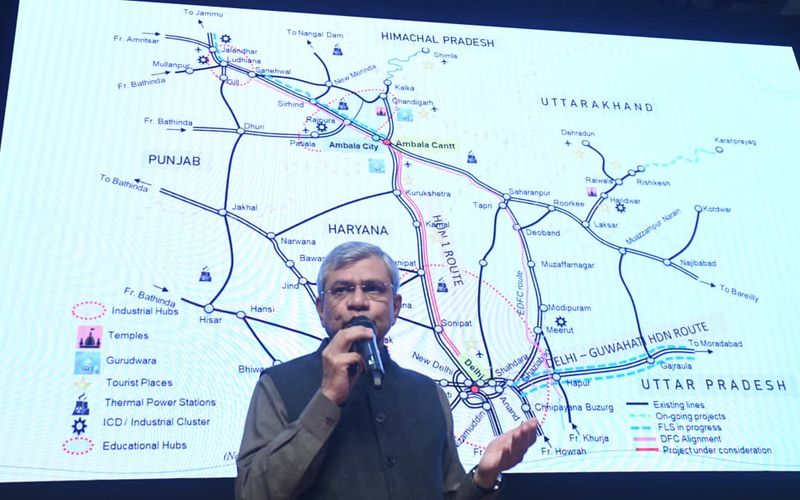
The 194-km Delhi–Ambala corridor, with an estimated cost of ₹5,983 crore, is being viewed as strategically significant. Union Minister for Information and Broadcasting Ashwini Vaishnaw said the upgraded route will support faster troop deployment from Delhi towards Jammu, passing through key locations such as Sonepat, Panipat and Kurukshetra.
The project is also expected to ease congestion and improve travel comfort for passengers on the Delhi–Chandigarh and Delhi–Jammu routes.
Officials indicated that the work is expected to be completed within four years and will involve minimal land acquisition. Plans include constructing one major bridge, building 28 additional bridges and strengthening older structures along the alignment.
The government has projected that the expansion will help cut carbon emissions by nearly 43 crore kilograms annually and generate an estimated 132 lakh man-days of employment during execution.
Improving Rail Efficiency Nationwide
According to a Cabinet note, adding extra lines on high-traffic routes will significantly enhance line capacity, streamline operations and reduce bottlenecks. The multi-tracking projects are intended to improve service reliability and overall mobility within the national rail network.
Final Meeting at Historic Complex
The approvals were granted during the last Cabinet meeting held at South Block, before central government offices shifted to newly developed administrative buildings, including Seva Teerth and Kartavya Bhavan.
The Cabinet also adopted a resolution recalling that the North and South Blocks were built during the British era and continued to function as administrative centres after Independence. The government noted with satisfaction the relocation of ministries and the Prime Minister’s Office to modern facilities designed to enhance efficiency and workplace productivity.
