

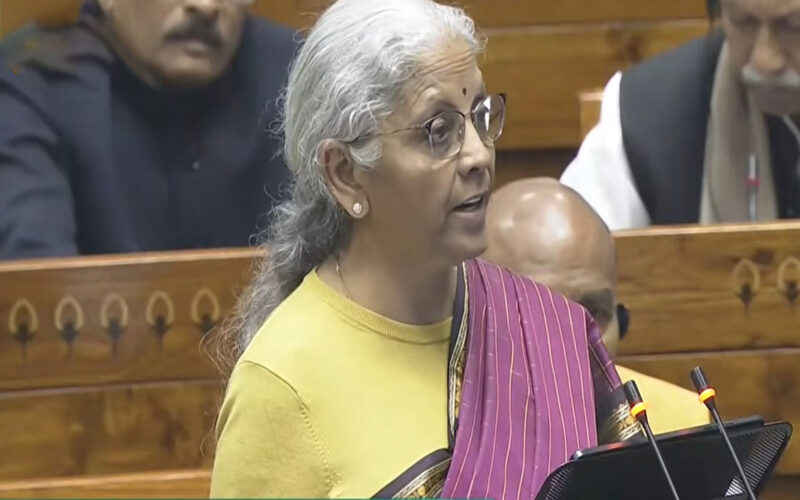
New Delhi: Union Finance Minister Nirmala Sitharaman on Sunday announced a major policy push for India’s biopharmaceutical sector, unveiling the ‘Bio Pharma Shakti’ programme with an outlay of Rs 10,000 crore for the next five years, while presenting the Union Budget in Parliament.
The initiative is aimed at creating a robust ecosystem for biopharma products and biosimilars, strengthening domestic manufacturing, innovation, and global competitiveness. Sitharaman said the programme aligns with the government’s broader vision of building self-reliance in high-end healthcare and life sciences.
In addition to the biopharma push, the Finance Minister proposed measures to expand manufacturing capacity in strategic and frontier sectors and announced plans to develop city economic regions as new growth engines.
Addressing Parliament, Sitharaman said India’s economic progress over the past decade has been defined by stability, fiscal prudence, and consistent growth. She underlined that the government led by Prime Minister Narendra Modi has focused on decisive governance and structural reforms, keeping Atmanirbhar Bharat at the core of policymaking.
“Since we assumed office 12 years ago, India’s economic trajectory has been marked by stability, fiscal discipline, sustained growth and moderate inflation,” she said, adding that the government would continue to balance growth ambitions with social inclusion.
Sitharaman presented her ninth consecutive Union Budget, reinforcing her record as the longest-serving finance minister to do so consecutively. Earlier, she tabled the Economic Survey 2025–26 in Parliament, following the established convention of presenting a review of the economy ahead of the Budget.
The Survey projected real GDP growth of 6.8–7.2 per cent for 2026–27, reflecting India’s strong medium-term growth potential despite global uncertainties. It also highlighted that India recorded its lowest average CPI inflation since the beginning of the series, with headline inflation averaging 1.7 per cent between April and December 2025, supported by easing food and fuel prices.
The inflation outlook remains favourable, backed by improved supply-side conditions and the gradual pass-through of GST rate rationalisation, the Survey noted.
