

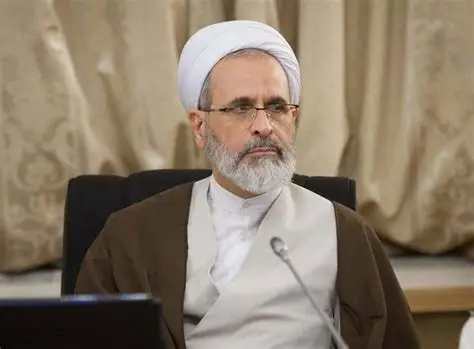
Tehran (Rajeev Sharma) — In the wake of the seismic shift in West Asian geopolitics, the Islamic Republic of Iran has moved to stabilize its leadership by appointing Alireza Arafi to lead a temporary leadership council. The announcement comes as the nation officially enters a 40-day period of national mourning following the confirmed death of Supreme Leader Ayatollah Ali Khamenei in a joint US-Israeli military operation on Saturday.
Arafi, a 67-year-old prominent cleric and a member of the Guardian Council, is widely seen as a pragmatist within the Iranian establishment. Born in 1959 in Yazd, he has held significant positions, including the Vice-Chancellorship of Al-Mustafa International University and the leadership of Iran’s seminary system. His appointment to the temporary council is a strategic move to ensure continuity as the Assembly of Experts prepares for the complex and high-stakes process of selecting a permanent successor to Khamenei, who led the nation for over three decades.
The selection of Arafi is particularly noteworthy given his public stance on modernization. Unlike some of his more conservative peers, Arafi has advocated for the integration of Artificial Intelligence (AI) and modern technology within Islamic frameworks to strengthen the state. His leadership of the transition council suggests that the Iranian regime may be looking for a balance between traditionalist values and the technological necessities of modern governance and warfare during this time of intense crisis.
As the nation observes the mourning period, the streets of Tehran remain under heavy security, with the Iranian Revolutionary Guard Corps (IRGC) on high alert. While the capital is draped in black and flags fly at half-mast, the internal succession battle is expected to be fierce, with speculation continuing to swirl around other potential candidates, including the late leader’s son, Mojtaba Khamenei. For now, Arafi’s council faces the daunting task of navigating the country through a state of “Ghost Skies,” economic volatility, and ongoing military exchanges with regional adversaries.
