

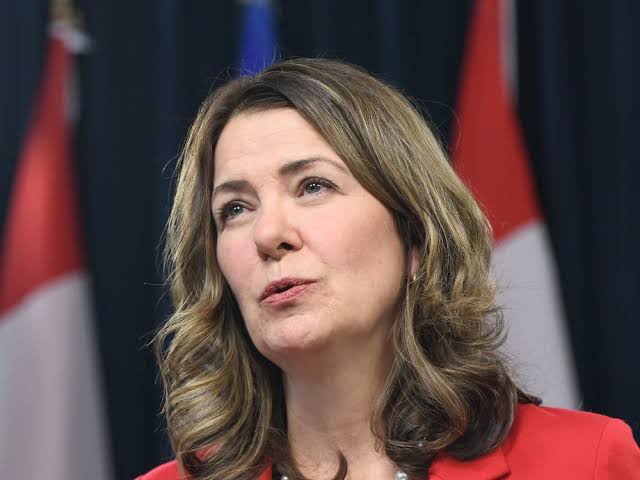
Calgary (Rajeev Sharma): The Alberta government has completed the legal framework for its sweeping health-care overhaul in 2025, and Premier Danielle Smith says the coming year will be crucial in proving that the controversial restructuring delivers better outcomes for patients.
The reorganisation dismantled Alberta Health Services as the province’s central health authority, reducing it to the role of a hospital service provider. New agencies have been created to separately oversee hospital care, continuing care, mental health and addiction services, and primary health care, all functioning under four health ministries.
Smith said the passage of key legislation during the fall sitting has effectively completed the restructuring phase, shifting the focus to improving performance across the system. She acknowledged the scale of the challenge and announced plans for a public dashboard that would track progress on emergency room wait times, ambulance response delays, surgical backlogs, and the addition of 1,500 new continuing-care spaces annually.
The premier also credited policy changes allowing more nurse practitioners to open clinics as a reason fewer Albertans are now without access to a primary-care provider. She reiterated her long-standing criticism of what she described as excessive bureaucracy within Alberta Health Services, arguing that reform was necessary to improve efficiency and service delivery.
When asked about accountability, Smith said her government would take responsibility for health-care outcomes while also holding service providers to account, noting that AHS still consumes the largest share of the province’s health budget. She rejected claims that the agency had been made a scapegoat, stating that public expectations for improved health services were legitimate.
Health-care reform has unfolded alongside other major political challenges for Smith’s government. The year began amid concerns over potential US tariffs under President Donald Trump. Smith defended her diplomatic outreach, saying it resulted in most Alberta goods continuing to cross the border tariff-free, benefiting the province’s oil and gas sector in particular.
Domestically, her government drew sharp criticism for invoking the Charter’s notwithstanding clause multiple times, including to end a teachers’ strike and protect legislation affecting transgender and gender-diverse Albertans from court challenges. While opposition parties accused the government of undermining democratic institutions, Smith maintained the actions were taken in exceptional circumstances to protect children.
The United Conservative Party government has also amended laws to expand citizen-led referendums, including provisions that allow for a potential vote on Alberta’s place in Confederation. These moves have coincided with recall campaigns targeting several government MLAs.
Meanwhile, allegations of corruption in health-care spending have continued to shadow the government, fuelling opposition demands for a public inquiry. The controversy led to the resignation of cabinet minister Peter Guthrie earlier this year, who has since left the UCP and begun organising a rival political movement.
Opposition NDP leader Naheed Nenshi described the government as increasingly unstable, arguing that health-care restructuring has created confusion rather than improvement. He said frontline workers consistently report that the system is not functioning better than it did years ago and accused the premier of deflecting blame for problems her government oversees.
Despite mounting criticism, Smith insists the reforms were necessary and says 2026 will be the year Albertans begin to see tangible improvements in health-care delivery.
