

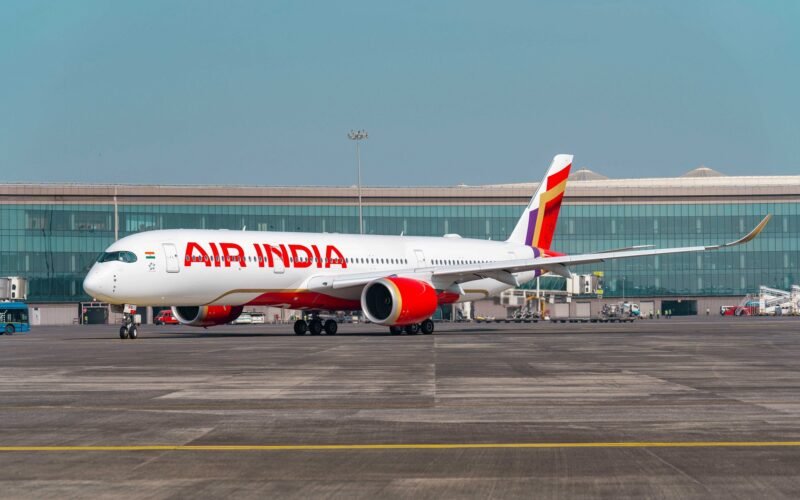
New Delhi (Gurpreet Singh): Air India is preparing to bring more of its operations under a common group structure with low-cost subsidiary Air India Express as it looks to reduce expenses, improve efficiency and return to profitability. The proposed changes include restructuring senior management, consolidating selected support functions and redesigning parts of its international network.
Air India CEO and Managing Director Tewolde Gebremariam outlined the priorities during an employee townhall on Wednesday, according to people familiar with the discussion. The strategy is part of the airline’s ‘One Air India Group’ approach, which aims to create closer coordination between the two carriers while retaining their distinct business models.
The development comes as the Tata Group-owned airline faces financial pressure from rising fuel costs and continuing airspace restrictions affecting international operations. <Cite refs={[“turn799128search8″,”turn799128search9”]}/>
Air India And Air India Express To Share More Support Functions
The two airlines will continue to operate under separate Air Operator Certificates (AOCs), which govern their respective regulatory and operational responsibilities. However, functions such as finance, human resources, information technology and centres of excellence are expected to be managed increasingly at the group level.
Customer-facing, operational and regulatory responsibilities will remain with the respective airlines.
Air India will continue to operate as a full-service carrier, while Air India Express will retain its low-cost model. The proposed arrangement is intended to reduce duplication and allow teams across both airlines to draw on shared expertise.
According to sources quoted in reports on the townhall, Gebremariam told employees that the objective was to make the two carriers work more closely as one group and generate operational synergies.
Senior Management Structure To Be Reshaped
The restructuring also involves changes to the airline’s leadership framework. The existing Air India Management Committee has been recast as the Air India Management Team.
Deepak Rajawat, who is scheduled to take over as Air India Express CEO on December 1, will also join the team. His appointment to lead the low-cost carrier was announced on November 18. <Cite refs={[“turn799128search2″,”turn799128search3”]}/>
Two new senior positions are also being created: Group Strategy Officer and Chief of Training Academy.
The training role is expected to bring the group’s flying academy, flight training organisations and technical training facilities under unified leadership. The move is aimed at improving coordination across the airline group’s training infrastructure.
International Network To Be Redesigned Amid Airspace Restrictions
Air India is also reviewing its international network to manage the impact of regional airspace restrictions on flight operations.
Sources said the airline plans to route more westbound connecting traffic through Mumbai, which is relatively less affected by the restrictions. Delhi, meanwhile, is expected to handle a greater share of eastbound connecting passengers.
The airline is also assessing the possibility of developing multiple aviation hubs across India, including in the southern part of the country.
These changes are intended to improve connectivity and make better use of the airline group’s network as it adjusts to evolving international operating conditions.
Cost Reduction And Operational Performance Remain Key Priorities
Restoring profitability remains a central challenge for the airline. As part of its cost transformation programme, management has received more than 1,500 suggestions from employees on reducing expenditure and improving operational efficiency, according to sources.
Gebremariam reportedly told employees that cost discipline would have to become an ongoing part of the organisation’s culture rather than a one-time exercise.
He also indicated that October and November had shown encouraging trends in passenger load factors, yields and revenue per available seat kilometre (RASK).
On operational performance, both Air India and Air India Express have recorded domestic on-time performance above 80 per cent over the past three months, while long-haul international operations have also improved, according to the information shared at the townhall.
The group’s overall Net Promoter Score (NPS), a measure of customer satisfaction and loyalty, rose from 35 to 38 year-on-year. Its domestic score increased from 48 to 51. Mishandled baggage incidents have also declined, although transfer baggage handling and connecting-flight efficiency remain areas requiring attention.
Gebremariam urged employees to focus on accountability, cost awareness and faster execution, saying the airline’s transformation would depend on turning its plans into measurable operational improvements.
