

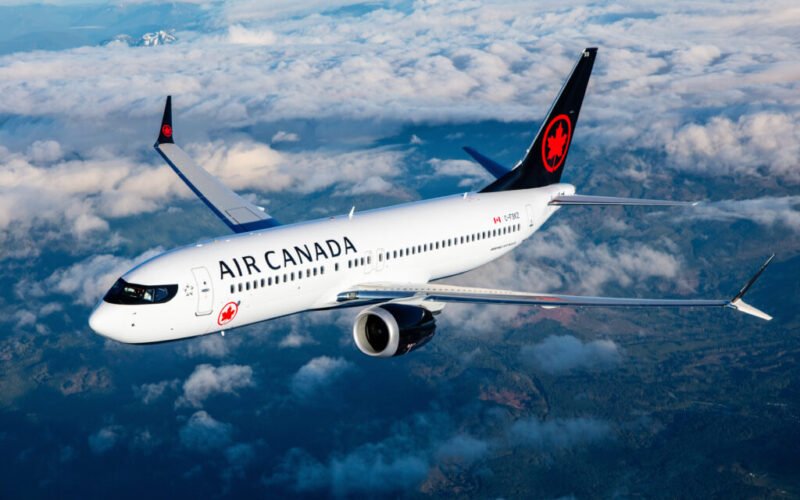
Ottawa (Rajeev Sharma): Air Canada is witnessing a sharp rise in overseas corporate travel as Canadian businesses increasingly look beyond the United States to expand trade ties, a senior company executive said on Friday.
The Montreal-based carrier has recorded nearly a 30 per cent increase in corporate traffic on long-haul routes across the North Atlantic, with growing demand for travel to Europe and the Asia-Pacific region. Chief Commercial Officer Mark Galardo said the trend reflects Canada’s efforts to diversify its trade partnerships and reduce reliance on the U.S. market.
The country’s largest airline expects this shift to support strong international demand in the coming years. In its fourth-quarter earnings outlook released Thursday, Air Canada projected its core profit for 2026 to come in slightly above Wall Street expectations, driven by robust long-haul bookings and increased premium travel.
Premium cabins now account for roughly 30 per cent of the airline’s total passenger revenue. Strong demand for business-class and other high-yield seats on international routes has helped offset weaker performance on Canada–U.S. services.
Travel patterns are also changing among leisure passengers. Amid ongoing trade tensions between Ottawa and Washington, many Canadians are opting to avoid trips to the United States and are instead choosing destinations in Europe and Latin America.
Despite the softness in transborder travel, Air Canada expects overall market conditions on U.S. routes to remain largely stable.
The airline is planning capacity growth to meet rising global demand. It forecasts available seat miles — a key measure of passenger capacity — to increase between 3.5 per cent and 5.5 per cent in 2026.
However, the company cautioned that higher labour costs resulting from new union agreements could put pressure on operating expenses even as revenues improve.
The shift in travel demand comes as Canadian policymakers explore new trade arrangements and stronger economic engagement with partners outside the United States, although the country remains heavily dependent on its southern neighbour.
