

New Delhi (Rajeev Sharma): India has warned that the Russia-Ukraine war could deepen food shortages in countries far removed from the conflict, drawing attention to the 1943 Bengal famine as a reminder of how wartime decisions can devastate civilian populations beyond the battlefield.
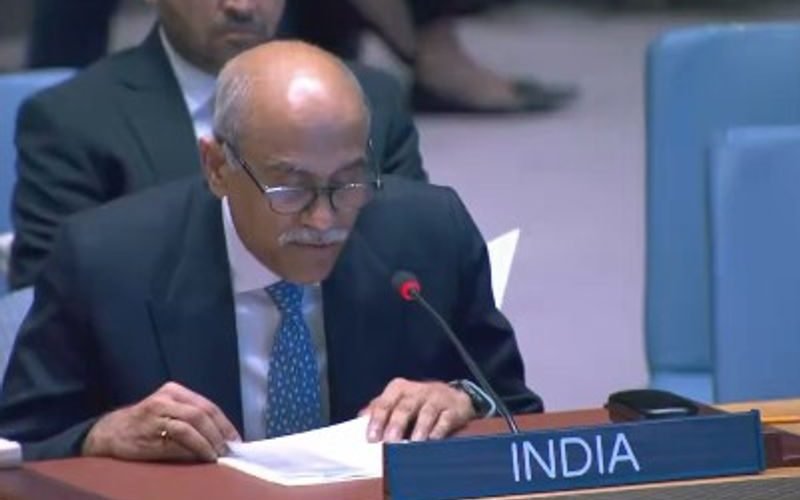
India’s Permanent Representative to the United Nations, Ambassador Parvathaneni Harish, raised the concern on Tuesday during a UN Security Council briefing on protecting critical energy infrastructure and Black Sea routes, which play an important role in global food supplies.
Referring to the Second World War, Harish said people who had no responsibility for starting a conflict could still become its unintended victims.
“The current situation is not different from the time of the Second World War when peoples not responsible for the start of the conflict became their unintended collateral damage,” he said.
India Draws A Parallel With The 1943 Bengal Famine
Harish cited the Bengal famine of 1943, in which more than three million people died, as an example of the devastating consequences of wartime priorities and decisions on people far removed from the fighting.
The Indian envoy argued that the disruption of food, fuel and fertiliser supplies caused by the Russia-Ukraine conflict could have consequences across international markets, placing countries in the Global South under particular pressure.
His remarks highlighted the wider humanitarian and economic impact of the war, beyond the territories directly affected by military operations.
Black Sea Disruptions Raise Global Food Security Concerns
Harish underlined the importance of the Black Sea region to global food supplies, noting that Russia and Ukraine together account for nearly a quarter of worldwide wheat, maize and barley exports.
He added that the Black Sea region and India together account for almost a fifth of global cereal production.
Disruptions to agricultural output, maritime connectivity and international trade can therefore affect food availability and prices in countries that depend on imports. Harish also referred to External Affairs Minister S Jaishankar’s remarks at the G20 Foreign Ministers’ Meeting last month, saying fertiliser supply disruptions were linked partly to developments in the Black Sea and partly to the Gulf and Red Sea.
India Raises Concerns Over Attacks On Merchant Ships
India also expressed concern over attacks on commercial vessels and the safety of Indian seafarers operating in the Black Sea region.
Harish referred to several incidents involving ships with Indian crew members. An Indian crew member was killed when the MV Omorfi came under attack on July 18. Three Indian nationals were aboard the MV Royad Mammadov when it was attacked in October.
He also mentioned attacks on the MV Golden Leo and MV AGN Ragnar, which, according to India’s statement, left four Indian seafarers dead and two missing.
Calling for an end to attacks on commercial shipping, India stressed the need to restore safe navigation through international waterways.
India Engaging Both Sides On Shipping Safety
Harish said India was engaging directly with both sides to address the safety of merchant shipping and seafarers, as well as the protection of grain export corridors.
He also highlighted the launch of the Group of Friends on Safety and Security of Shipping and Seafarers, an initiative jointly started by India and Liberia at the United Nations.
India’s intervention at the Security Council linked the security of maritime routes to a wider concern: the impact of prolonged conflict on food, energy and fertiliser supplies, particularly for countries with limited capacity to absorb external shocks.
