

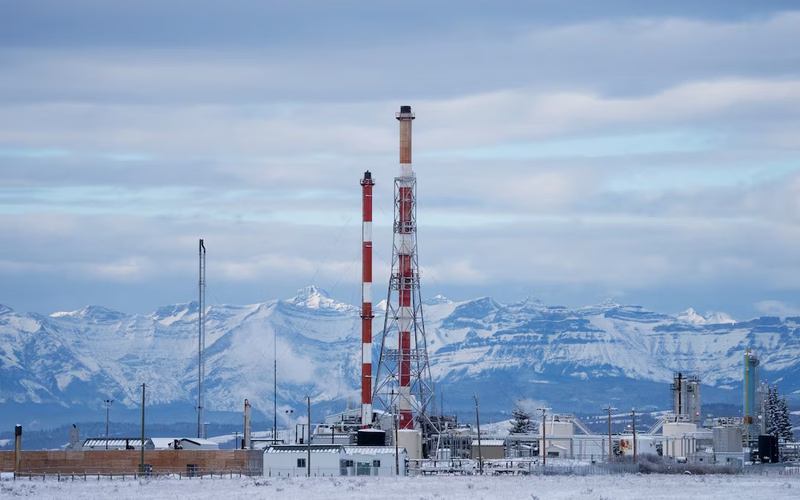
Edmonton (Rajeev Sharma): The Alberta government in Canada is introducing new legislation to expand natural gas transmission infrastructure as the province faces growing demand and concerns over the capacity of its existing pipeline network.
The proposed Natural Gas Infrastructure Act would establish a framework for planning and supporting strategic natural gas infrastructure projects across Alberta. It would also give the provincial government additional tools to encourage competition and infrastructure development when the industry’s requirements are not being met.
Announced on November 23, 2026, the legislation aims to help natural gas producers transport supplies to existing and new customers within Alberta and other markets.
The government said the existing infrastructure system is operating at full capacity through 2029, with uncertainty about available capacity beyond 2030.
Why Does Alberta Need New Natural Gas Infrastructure?
Natural gas plays a major role in Alberta’s economy, supplying established industries as well as emerging sectors.
According to the provincial government, demand is linked to oil sands expansion, electricity generation, petrochemical production, hydrogen development, liquefied natural gas (LNG) exports and data centres.
The proposed legislation would help identify future demand, market access requirements, infrastructure gaps and regional priorities. These assessments would also inform regulatory decisions and long-term infrastructure planning.
Energy and Minerals Minister Brian Jean said Alberta’s growing economy requires a natural gas network capable of keeping pace with increasing demand.
He said the legislation would give the province tools to plan for long-term requirements, encourage competition and support strategic infrastructure development to attract investment and create jobs.
What Is The NGTL System And Why Is It Important?
The proposed framework also focuses on increasing competition and investment in the Nova Gas Transmission Ltd. (NGTL) system, which forms a major part of Alberta’s natural gas collection and transmission network.
The government wants to improve the movement of natural gas within the province so producers can reach more buyers and businesses can secure reliable supplies.
Improved transmission capacity within Alberta could also create better opportunities to transport natural gas beyond the province and access international markets.
The government said the legislation would complement Alberta’s existing regulatory framework and support the development of additional transmission infrastructure.
Could Alberta Government Enter The Natural Gas Transmission Business?
One of the significant provisions of the proposed legislation is the possibility of creating a future Crown entity to participate in energy transmission.
However, the government has clarified that such participation would only be considered if private industry is unable to independently meet infrastructure requirements. It would be treated as a last resort rather than the primary approach.
Alberta’s government also pointed out that the province’s natural gas collection and transmission system was originally built by the government.
What Does The Energy Industry Say?
Lisa Baiton, president and CEO of the Canadian Association of Petroleum Producers (CAPP), welcomed the focus on developing natural gas infrastructure.
She said timely and cost-effective infrastructure development would be necessary to support Alberta’s plans to expand oil and gas production, create new economic opportunities and increase exports.
Baiton added that aligning fiscal policies, regulatory improvements and infrastructure development would be important to attracting investment. CAPP said it looked forward to reviewing the proposed legislation and continuing to work with the provincial government and natural gas providers.
The Alberta government said the proposed law is intended to strengthen the province’s natural gas sector, improve energy security and support long-term economic growth.
