

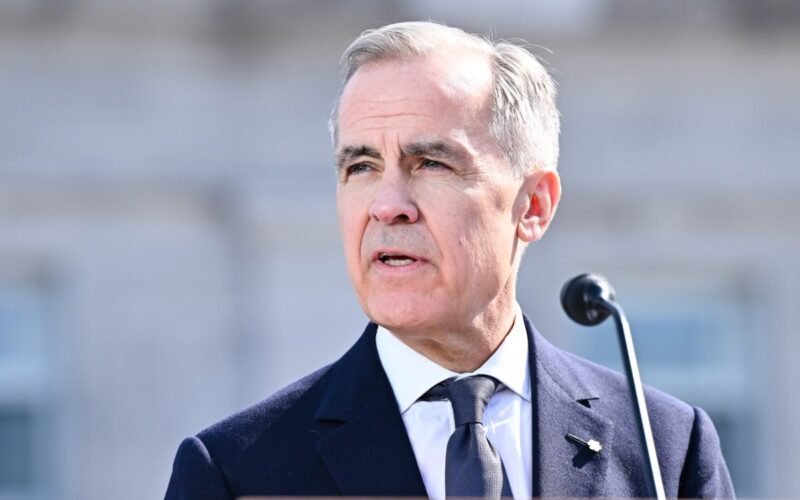
Ontario (Rajeev Sharma): Canadian Prime Minister Mark Carney has concluded an extensive diplomatic and economic tour across Europe and Asia, highlighting new trade opportunities, investment partnerships and strategic agreements aimed at strengthening Canada’s global economic position. The week-long visit culminated in his participation at the 33rd Asia-Pacific Economic Cooperation (APEC) Economic Leaders’ Meeting in Shenzhen, China, on November 19.
During the summit, Carney joined leaders from across the Asia-Pacific region in discussions on strengthening trade connectivity, improving supply chains and encouraging economic cooperation. He emphasised the importance of predictable trade policies and deeper regional integration to attract investment, support innovation and promote shared economic growth.
APEC leaders renewed the region’s Connectivity Blueprint to improve infrastructure and supply chain networks, advanced paperless trade initiatives to reduce business costs and agreed on common principles to safeguard food supplies against international disruptions. Carney also outlined Canada’s domestic efforts, including plans to expand the capacity of the Port of Vancouver, develop a pipeline to the West Coast and introduce digital trade legislation through the *Canada Strong Act*.
On the sidelines of the summit, the Canadian Prime Minister held bilateral meetings with leaders from Australia, China, Mexico, New Zealand, South Korea, Singapore, Thailand and the United States. Discussions focused on expanding cooperation in artificial intelligence, critical minerals, energy, financial technology and infrastructure.
**Trade agreements and partnerships across Asia**
The APEC gathering marked the final stop of Carney’s international tour, which also included engagements in Ireland, the Philippines and Cambodia.
In Dublin, Ireland, the Prime Minister participated in the Summit of the European Political Community, where he worked towards strengthening Canada’s relationship with the European Union. Discussions covered market access, supply chain resilience and collective security, while Carney reiterated Canada’s support for Ukraine. The engagements also built on the Alliance for the Future, launched by Canada and the EU in Montreal in October.
In Manila, the Philippines, Carney announced substantial progress in negotiations for a free trade agreement between Canada and the Association of Southeast Asian Nations (ASEAN), alongside the conclusion of negotiations on a separate Canada-Philippines trade agreement. Both agreements are targeted for signing in 2027.
The proposed ASEAN agreement would provide Canadian businesses access to a market of nearly 700 million people and is projected to add approximately $2 billion to Canada’s GDP while supporting nearly 14,000 jobs. The Philippines agreement, meanwhile, could help triple Canadian exports to the country by 2035. Carney also advanced defence and security cooperation with Manila and announced a Canadian contribution of up to $560 million to the Tropical Forest Forever Facility to support climate and nature initiatives.
**New cooperation with Cambodia and China**
During his visit to Phnom Penh, Cambodia, Carney strengthened bilateral ties and advanced cooperation in trade, investment, defence and security. He also welcomed Canada’s designation as the host of the 2028 Sommet de la Francophonie, which is expected to bring representatives from more than 90 states and governments to Canada’s National Capital Region. The gathering will focus on economic and cultural cooperation, including the promotion of the French language in the digital age.
The final leg in Shenzhen produced further developments in Canada’s economic relationship with China. The two countries agreed to extend and expand their bilateral economic and trade arrangement until December 2028, providing additional tariff relief for approximately $400 million in Canadian exports.
According to the Canadian government, the latest developments mean that market access has been restored for more than 90 per cent of trade previously affected by tariff measures, representing nearly $7.5 billion in Canadian exports. The countries also announced plans for a Canada-China Year of e-Commerce and a major Canadian trade mission to China in 2027. Additional commercial and technical agreements and investments were welcomed across education, business, financial services, arts and culture.
**Canada seeks broader access to global markets**
Reflecting on the international engagements, the Canadian government said the tour was aimed at diversifying trade relationships, attracting investment and creating new opportunities for Canadian businesses and workers.
Canada currently has 20 free trade agreements covering 60 countries, providing preferential access to more than two billion consumers and economies representing approximately two-thirds of global GDP.
The government said the latest diplomatic and commercial engagements are part of a wider strategy to strengthen Canada’s domestic economic capacity while expanding its presence in international markets.
