

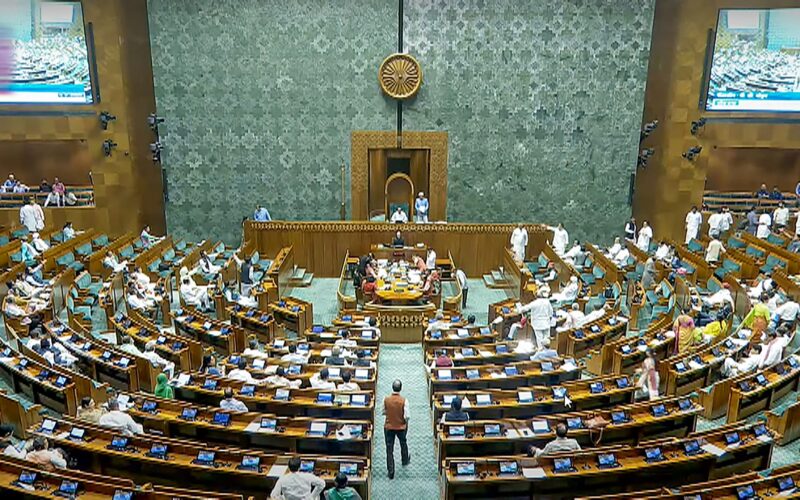
New Delhi (Gurpreet Singh): In a significant legislative movement, the Union Government has introduced a motion in the Lok Sabha to refer the Foreign Contribution Regulation Amendment Bill, 2026, to a Joint Parliamentary Committee. The decision follows substantial concerns raised by opposition parties, regional leaders, and civil society organisations regarding the proposed statutory changes. The joint panel will consist of 31 members, comprising 21 representatives from the Lok Sabha and 10 from the Rajya Sabha, and is mandated to submit its report to Parliament by the final day of the first week of the Winter Session.
The referral to a joint committee comes after sustained demands from opposition groups, including the Congress, Trinamool Congress, and DMK, who have called for the total withdrawal of the draft law. In addition, prominent regional figures from the Northeast, such as Mizoram Chief Minister Lalduhoma and Nagaland Chief Minister Neiphiu Rio, alongside major religious representative bodies like the Catholic Bishops Conference of India, have voiced strong reservations over the scope of the proposed amendments.
First introduced in the Lok Sabha on March 25, 2026, the draft legislation seeks to significantly enhance state oversight on non-governmental organisations that receive overseas financial support. Among its central provisions, the bill empowers a government-appointed designated authority to assume management and control of assets belonging to organisations whose registrations are revoked or not renewed. Additionally, it establishes a minimum threshold requirement of 10 lakh rupees in foreign funding over two preceding financial years for registration renewal, while placing explicit restrictions prohibiting the utilization of foreign contributions for religious conversions.
Government representatives maintain that directing the draft legislation to a joint parliamentary committee will facilitate thorough stakeholder consultations while addressing legislative resistance inside Parliament. Analysts note that this procedural step mirrors the legislative pathway taken during the Waqf Amendment Bill, which underwent extensive joint committee scrutiny prior to its final passage.
