

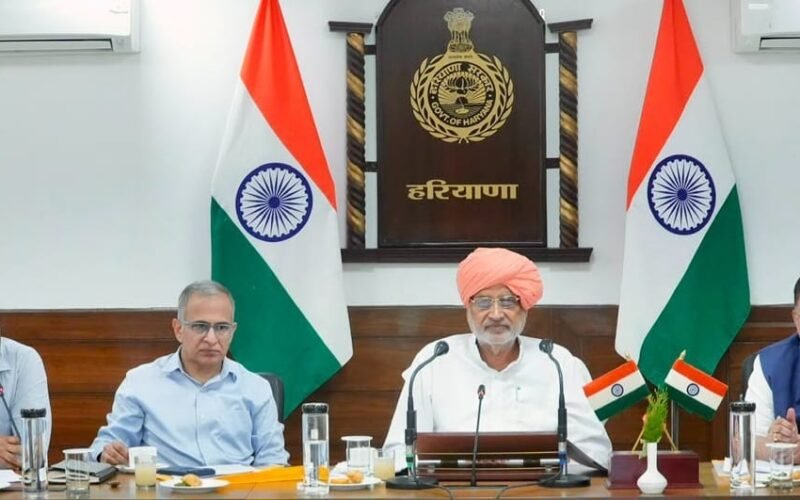
Chandigarh (Balwinder Singh): Haryana is rapidly positioning itself to become a premier national hub for the production of high-quality certified seed potatoes, accelerating its existing leadership in agriculture and horticulture. Speaking as the chief guest at a high-level state workshop in Chandigarh today, Haryana Agriculture and Farmers Welfare Minister Shyam Singh Rana highlighted the state’s strategic shift toward scientific seed cultivation. Hosted by the Department of Horticulture, the specialized session focused heavily on the upcoming implementation of the landmark Haryana Tissue Culture-Based Seed Potato Act, 2026, alongside the state’s comprehensive Farmer Producer Organisations (FPO) Mission and the overarching Haryana Horticulture Policy.
The proposed Haryana Tissue Culture-Based Seed Potato Act, 2026 is designed to systematically regulate, expand, and enforce the production of disease-free, high-yielding, and completely traceable seed potatoes. Minister Rana emphasized that while the demand for top-tier seed potatoes is skyrocketing across India, the current national availability remains acutely restricted. The newly structured legislative framework aims to establish a robust, scientifically backed ecosystem utilizing breakthrough modern technologies such as tissue culture and aeroponics. This legal framework will assure strict quality control, enabling progressive farmers to capture premium value in domestic markets and unlock fresh commercial pathways.
The commercial scale of this agricultural transition is heavily backed by the state’s existing crop footprint. Departmental experts and research scientists revealed during the workshop that potato cultivation currently spans roughly 33,000 hectares across Haryana, indicating massive untapped potential for localized seed multiplication. Following the formal enactment of the new legislation, Haryana is projected to scale its capacity to produce approximately 10 lakh quintals of certified seed potatoes within the initial years. This surge in volume will not only completely satisfy the state’s internal agricultural demands but will also allow Haryana to serve as a principal supplier of elite seed strains to surrounding agrarian states.
To ensure the financial benefits of this yield reach small and marginal growers, the state workshop dedicated extensive deliberations to the operational restructuring of the FPO Mission. Senior officials detailed how FPOs act as critical growth drivers by granting individual farmers collective bargaining power, sophisticated storage infrastructure, modern processing capabilities, and streamlined value-addition avenues. The Haryana government continues to aggressively subsidize and reinforce these producer organizations to link them directly with corporate agribusinesses. Furthermore, under the revised Haryana Horticulture Policy, the administration outlined a range of enhanced incentives aimed at scaling up protective farming, high-value crop adoption, and export-oriented cultivation to secure long-term rural prosperity.
