

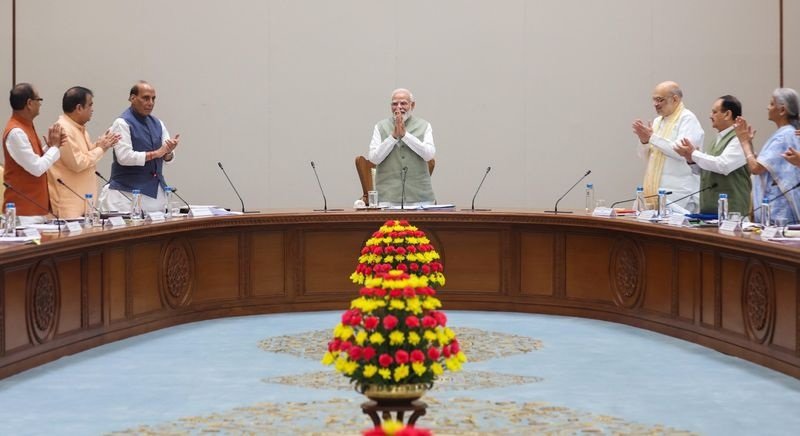
New Delhi (Rajeev Sharma): Prime Minister Narendra Modi on Wednesday reached a landmark in Indian political history, becoming the country’s longest-serving elected Prime Minister. The occasion was marked by the Union Cabinet through a special resolution and a standing ovation during its meeting at Sewa Teerth.
Ministers acknowledged the achievement as Modi completed 4,399 days in office as an elected Prime Minister, moving ahead of Jawaharlal Nehru’s record of 4,398 days. Nehru had led the country from 1952 until his death in 1964, while Modi has remained in office since first taking charge on May 26, 2014.
The Cabinet resolution described the milestone as a notable chapter in India’s democratic journey, highlighting the challenges of governing a nation with immense cultural, linguistic and geographical diversity. It noted that maintaining continuity in leadership over such a long period is uncommon in modern democracies and reflects sustained electoral support.
According to sources, the resolution drew attention to the political stability witnessed under Modi’s leadership over three consecutive terms. At a time when several countries have seen frequent government changes and policy shifts, India has experienced a relatively consistent governance framework, the document stated.
The Cabinet also pointed to Modi’s international profile, noting that he has regularly featured among the world’s most popular elected leaders in various opinion surveys. It further mentioned that numerous countries have honoured him with their highest civilian awards in recognition of his contributions to bilateral relations and global engagement.
A significant portion of the resolution focused on Modi’s personal and political journey. Ministers described his rise from a modest background to the nation’s highest elected office as an example of the opportunities available within India’s democratic system. The document noted that his ascent came without the support of a political family legacy.
Reviewing developments during the past decade, the resolution cited major expansions in infrastructure, digital services and welfare programmes. It also referred to reports indicating substantial reductions in multidimensional poverty and improvements in access to government services through technology-driven initiatives.
The Cabinet further credited the period with strengthening India’s economic standing globally. It noted that the country has emerged as one of the fastest-growing major economies, expanded its international partnerships and increased its influence in debates surrounding climate action, emerging technologies, sustainable development and the concerns of developing nations.
Concluding its remarks, the Cabinet said the milestone symbolises both political continuity and the confidence placed by voters in democratic institutions, describing it as a significant moment in the evolution of contemporary India.
