

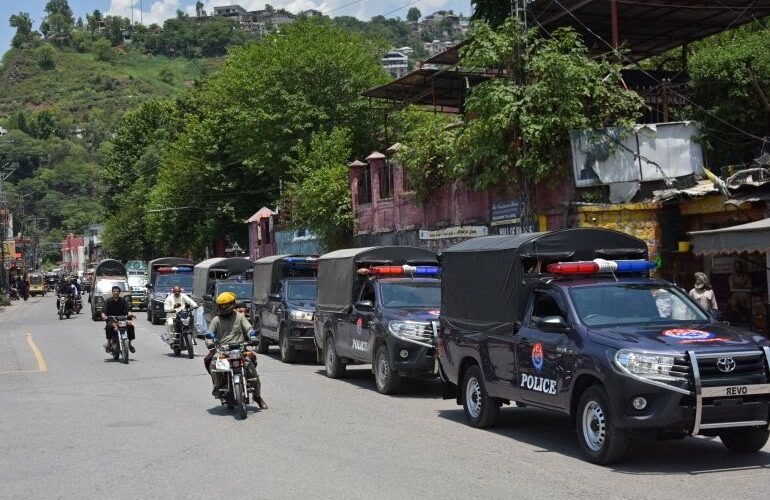
Rajeev Sharma :- Tensions have escalated sharply across Pakistan-occupied Kashmir (PoK) following the government’s decision to ban the Joint Awami Action Committee (JAAC), triggering widespread protests and violent confrontations between demonstrators and security forces. The unrest has reportedly claimed multiple lives and left dozens injured, raising concerns over law and order in the region ahead of upcoming elections.
The violence intensified in Rawalakot, where supporters of the banned organisation gathered outside a hospital mortuary after the death of a party worker in an earlier shooting incident. The gathering soon turned confrontational, leading to clashes with security personnel. Reports indicate that casualties occurred on both sides during the unrest, while several people sustained injuries.
The controversy stems from the recent declaration of JAAC as a prohibited organisation under anti-terror laws. Following the ban, security agencies launched operations against individuals linked to the group, a move that further fuelled public anger and protests in several parts of PoK.
At the heart of the agitation is the issue of political representation. JAAC has strongly opposed the reservation of 12 seats in the 45-member PoK Assembly for refugees residing in other parts of Pakistan, arguing that the move undermines the political voice of local residents. The organisation has demanded the withdrawal of the decision.
Apart from political concerns, the group has been actively campaigning against rising inflation, unemployment, electricity shortages and what it describes as administrative neglect. Over the past two years, it has organised several demonstrations over increasing utility costs and economic hardships faced by residents.
The organisation has also called for a region-wide shutdown in protest against the ban, restrictions on internet services and the reported killing of one of its leaders. Human rights organisations have expressed concern over the deteriorating situation, urging authorities to address public grievances through dialogue rather than force.
With elections scheduled next month, authorities have tightened security across the region. Internet services have reportedly been restricted in several areas, public gatherings are being closely monitored and additional security personnel have been deployed to prevent further escalation. The developments have added a new dimension to the political uncertainty prevailing in PoK.
