

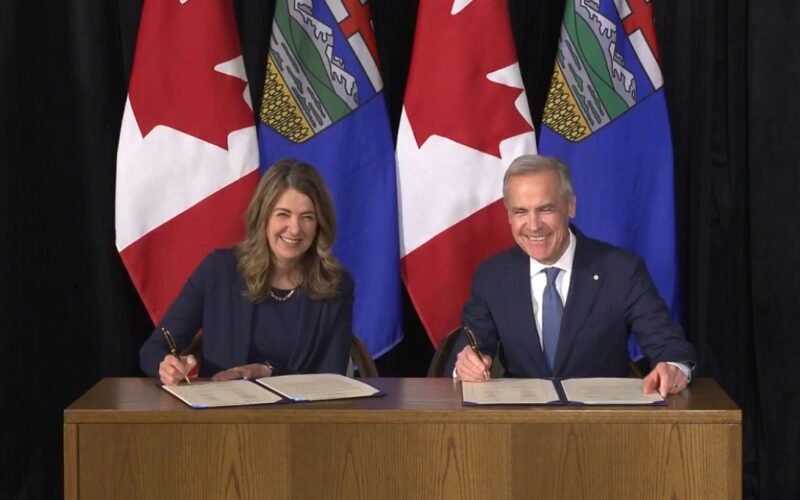
Calgary (Rajeev Sharma): The governments of Alberta and Canada have finalized major elements of the Alberta Canada Energy Memorandum of Understanding, paving the way for a new west coast oil pipeline that could begin construction as early as Sept. 1, 2027. The agreement, announced on May 15, 2026, is aimed at expanding Canada’s energy exports to Asian and global markets while reducing regulatory uncertainty for investors and industry partners. The proposed Indigenous co-owned pipeline would transport more than one million barrels of oil per day to a west coast export terminal, helping Canada diversify beyond reliance on a single energy customer.
Danielle Smith said the agreement sends a strong signal that Alberta and Canada are serious about building major infrastructure and creating long-term investment opportunities in the energy sector. Mark Carney described the deal as a step toward a more prosperous and resilient Canadian economy, adding that the governments are committed to a “one project, one review” approach to streamline approvals.
Under the agreement, the federal government will fast-track review of Alberta’s submission to the federal Major Projects Office, with the goal of designating the pipeline as a project of national interest by Oct. 1, 2026.
The deal also includes major changes to industrial carbon pricing. Instead of the previously planned federal carbon price of $170 per tonne by 2030, the new agreement caps the price at $130 per tonne by 2035, with gradual increases afterward. Alberta says the revised framework could save industry partners an estimated $250 billion by 2050.
The agreement also confirms that the federal government will not proceed with a national oil and gas emissions cap, while Alberta will continue regulating methane emissions under its own system. Both governments also pledged support for major carbon capture, utilization and storage projects, including the Oil Sands Alliance Pathways project.
Business and Indigenous leaders welcomed the announcement, calling it a significant step toward economic growth, investment certainty, Indigenous ownership opportunities, and expanded access to global energy markets.
