

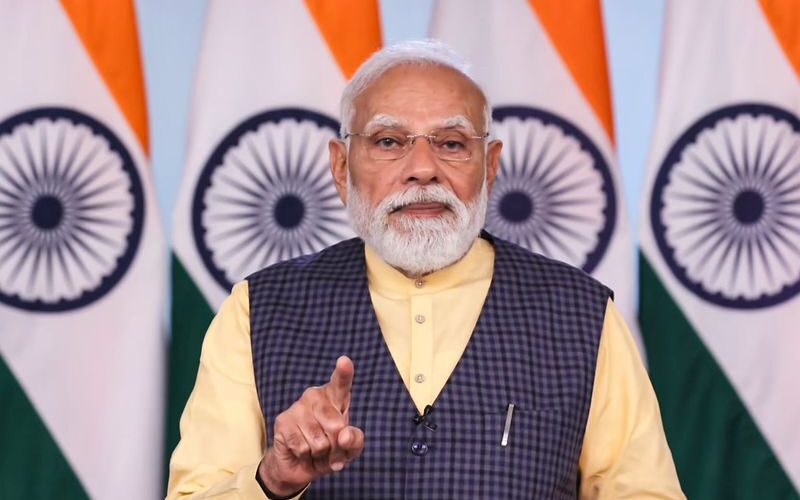
New Delhi (Gurpreet Singh)— Prime Minister Narendra Modi marked International Women’s Day by launching a massive ₹33,500 crore infrastructure and housing package for the national capital on Sunday, March 8, 2026. The wide-ranging developmental push includes a ₹18,000 crore expansion of the Delhi Metro and the dedication of thousands of residential units, signalling a major step toward modernizing urban living and enhancing safety for women in the city.
A central highlight of the day was the operationalization of two significant Delhi Metro corridors. The routes from Majlis Park to Maujpur, spanning 12 kilometres, and Majlis Park to Deepali Chowk, covering nine kilometres, are now active. These expansions finally provide reliable Metro access to densely populated areas like Wazirabad and Bhajanpura, which have long awaited better connectivity. Furthermore, work has officially commenced on three additional corridors designed to link the city’s fringes more effectively to the central hub.
Union Housing and Urban Affairs Minister Manohar Lal Khattar, speaking at the event, noted that the day was a tribute to “women power” and a milestone for Delhi’s growth. He highlighted the inauguration of over 6,500 residential units, including several government residences in Sarojini Nagar now dedicated to the public. Khattar recalled that the foundation of the Delhi Metro was laid 24 years ago by former Prime Minister Atal Bihari Vajpayee, who envisioned the network as a symbol of modern India. He asserted that under the current leadership, that vision has reached unprecedented scales.
Chief Minister Rekha Gupta hailed the expansion as a “huge gift” specifically for the safety and mobility of women in the capital. Beyond transport, the Chief Minister provided an update on various social welfare and urban development initiatives completed over the past year. She reported that 70,000 girls have benefited from financial aid under the Ladli Scheme, while the city’s educational infrastructure has been bolstered by 7,000 smart classrooms and 100 digital libraries.
In a move toward public health, the government has also made free cervical cancer vaccines available for girls aged 14 to 15. The Chief Minister further addressed urban sustainability, noting that 70 Atal Canteens are now providing daily meals to the vulnerable, while a comprehensive 50-year drainage plan has been initiated to tackle the long-standing issues of city flooding and river pollution. This holistic approach to development aims to transform Delhi into a safer, more efficient, and inclusive metropolis.
