

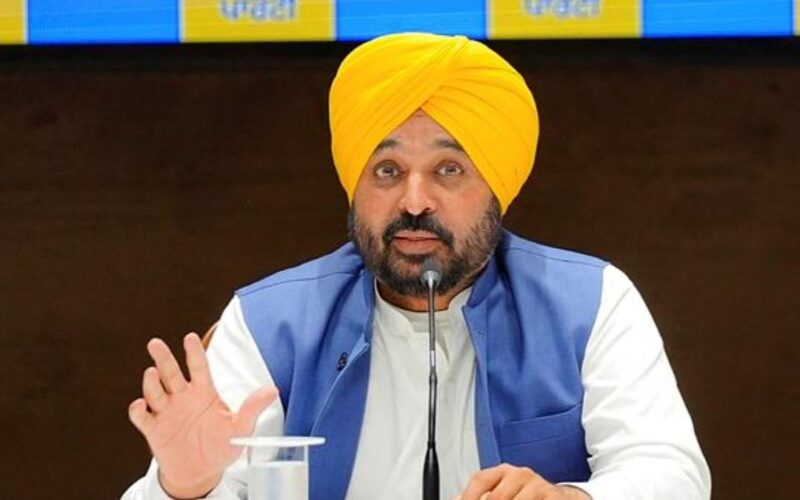
Chandigarh (Gurpreet Singh): Chief Minister Bhagwant Mann has officially announced that the Punjab government will present its state budget for the 2026-27 fiscal year on March 8. Speaking during a visit to Gujarat, the Chief Minister provided early reassurance that the upcoming financial roadmap will be “public-friendly” and, crucially, will not include any fresh taxes or increases in existing tax rates. This commitment aims to provide relief to the common citizen, contrasting with what Mann described as “corporate-centric” budgeting at the federal level.
The 2026-27 budget is particularly significant as it marks the final full fiscal plan of the current Aam Aadmi Party (AAP) administration before the state heads to the polls in 2027. Beyond the “no-tax” pledge, the government is expected to focus heavily on welfare schemes and infrastructure. One of the most anticipated announcements is the potential rollout of a monthly honorarium of ₹1,000 for women aged 18 and above—a major pre-election promise. Funding for such initiatives is reportedly being bolstered by revenue from the auction of government land and improved fiscal management.+1
Addressing the state’s economic vision, Mann highlighted that Punjab is increasingly relying on its own resources to build a “Sunehra (Golden) Punjab,” alleging that the central government has consistently ignored the state’s needs in the Union Budget. The state’s strategy focuses on reinvesting taxpayer money into public services, such as the ongoing expansion of Aam Aadmi Clinics and the transformation of government schools into “Schools of Eminence.” By avoiding new financial burdens, the administration intends to maintain the momentum of these social welfare programs while simultaneously promoting industrial growth.+1
With the budget session likely to begin in early March following the Holi holidays, the March 8 presentation will serve as a definitive statement of the government’s priorities. The administration plans to use the session to showcase its achievements in healthcare, education, and free electricity, positioning the “no-tax” budget as a testament to its “pro-people” governance model.
