

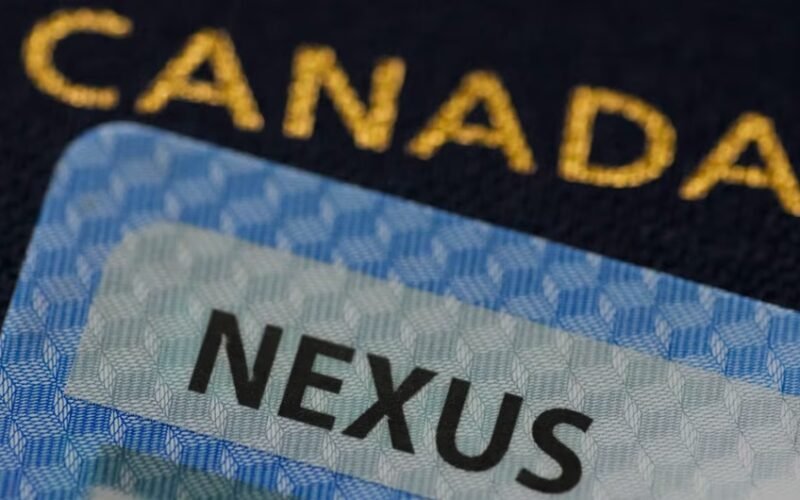
OTTAWA (Rajeev Sharma): With fewer Canadians flying south of the border, a senator from Alberta is urging Ottawa to develop a homegrown airport screening fast-pass program that would allow travellers to bypass long security lines without relying on a U.S.-run system.
Sen. Paula Simons introduced a motion in the Senate last fall calling for the creation of a Canadian-controlled trusted traveller initiative. The proposal aims to provide quicker security clearance at domestic airports while removing dependence on the binational Nexus program.
“It’s rare for a country to hand over such a critical part of its airport screening process to another government,” Simons said in an interview. “Canada should have its own system that reflects our priorities and values.”
A Canadian alternative
Currently, members of the public can only access expedited airport security screening by enrolling in Nexus, a joint Canada–U.S. program that requires applicants to undergo background checks by authorities in both countries. Although the program offers significant benefits for cross-border travel, it also ties Canadian airport security privileges to American approval.
Before the COVID-19 pandemic, interviews for Nexus membership were conducted in Canada. Since 2023, however, applicants have been required to travel to the United States to complete the process — an added burden for those who no longer regularly cross the border.
Simons says a domestic alternative would provide Canadians with faster airport screening without the complications of U.S. involvement, particularly for travellers whose trips are primarily within Canada or overseas.
“You might still want Nexus if you travel frequently to the U.S.,” she said. “But for those who don’t, there should be another option.”
Costs and access
According to a recent analysis by the Parliamentary Budget Officer, launching such a program would cost about $7 million over five years after accounting for operational expenses and application fees. The report suggests the cost to applicants would be approximately $50, though Simons believes slightly higher fees could allow the program to fully fund itself.
For comparison, Nexus membership currently costs US$120.
The senator’s proposal mirrors similar programs elsewhere, including the U.S. Transportation Security Administration’s PreCheck, which offers expedited screening independent of international travel privileges.
Airport sector support
Canada’s airport industry has welcomed the idea, arguing that broader access to verified traveller lanes would improve efficiency and reduce congestion at security checkpoints.
The Canadian Airports Council says a national trusted traveller system could streamline passenger movement and better manage growing airport volumes.
“Airports want to see this evolve into a truly domestic program, fully owned and operated by Canada,” said council president Monette Pasher. “It would allow more Canadians to benefit from faster screening without needing to apply through Nexus.”
Human rights concerns
Beyond logistics, Simons says there are civil liberties reasons to decouple Canada’s airport fast-pass system from the U.S. application process.
She pointed to recent changes in American policy that no longer recognize the “X” gender marker on Nexus applications, forcing Canadians to select either male or female.
“Requiring trans, non-binary and two-spirit Canadians to compromise their identity just to access faster screening is discriminatory,” Simons said, adding that such rules conflict with protections guaranteed under the Canadian Charter of Rights and Freedoms.
Next steps
The Senate is expected to vote on the motion in the coming months. If approved, Simons believes the federal government would be open to developing the program, especially as air travel patterns continue to evolve.
“As Canadians travel differently than they once did, our policies should adapt,” she said. “This is about sovereignty, fairness, and making travel smoother for everyone.”
