

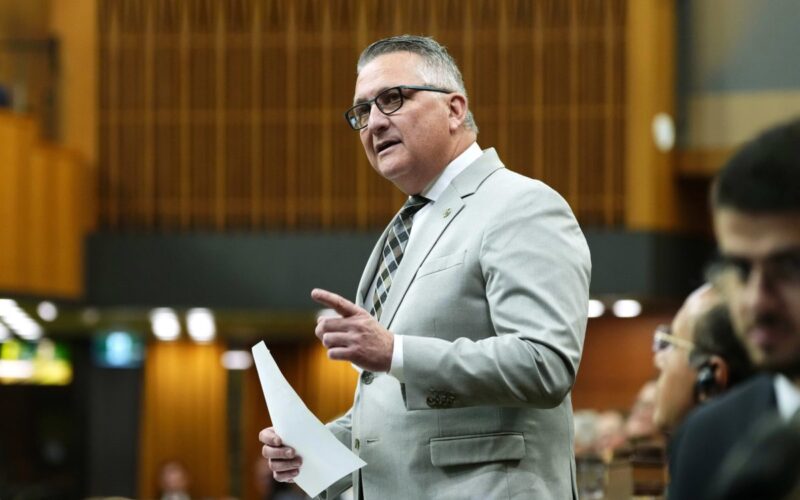
Ottawa (Rajeev Sharma): China has begun moving swiftly to resume imports of Canadian canola and beef following a recent agreement between Ottawa and Beijing to reduce trade tariffs, Federal Agriculture Minister Heath MacDonald said on Tuesday.
Speaking to reporters in Ottawa, MacDonald confirmed that a Chinese importer has placed an order for 60,000 metric tonnes of Canadian canola seed. He also said a Canadian company is preparing to ship its first consignment of beef to China as early as next week.
This marks the first time China has agreed to purchase Canadian canola seed and beef since trade restrictions were imposed on the products. “That’s how quickly this whole process has taken place,” MacDonald said. “When the door opened, it opened.”
The minister made these remarks while announcing that the federal government is launching consultations on a new long-term agreement aimed at funding and supporting Canada’s agriculture sector from 2028 onward.
The renewed shipments come as Canada recalibrates its trade relationship with China. On Monday, Beijing officially lifted its ban on Canadian beef imports, which had been imposed after an atypical case of bovine spongiform encephalopathy (BSE), commonly known as mad cow disease, was detected on an Alberta farm in 2021. Experts have confirmed that atypical BSE poses no risk to human health.
Last week, China also reduced tariffs on Canadian canola seed and temporarily removed levies on canola meal, lobsters, crabs and peas. In return, Canada agreed to ease duties on Chinese electric vehicles.
MacDonald said the easing of agricultural trade barriers will help Canada diversify markets and strengthen economic growth. He noted that Canada’s farmers and food processors contribute nearly $150 billion annually, accounting for about seven per cent of the country’s gross domestic product.
The Canadian Cattle Association welcomed the reopening of the Chinese market. “We are pleased to see renewed access into China, one of the largest export markets for beef,” said association president Tyler Fulton, adding that expanded market access is critical for the sector’s long-term resilience.
However, MacDonald acknowledged that challenges remain, particularly with Canadian pork exports, which continue to face Chinese tariffs. “We need to further identify the situation with China to ensure that we’re meeting their demands and they’re meeting our demands,” he said.
While no timeline was provided for the canola shipment, MacDonald noted that tariff reductions on the crop are scheduled to take effect on March 1. He praised Canadian farmers for their patience and professionalism throughout the negotiations.
Saskatchewan Premier Scott Moe, whose province produces more than half of Canada’s canola, thanked Prime Minister Mark Carney for finalizing the agreement. Calling the deal “huge” for both provincial and national economies, Moe said it would benefit ranchers and canola farmers alike.
In contrast, Ontario Premier Doug Ford criticized the agreement, arguing it could negatively impact Ontario’s auto sector. The deal allows up to 49,000 Chinese electric vehicles into Canada at a reduced tariff rate of 6.1 per cent.
Moe dismissed those concerns, stating that the number represents only three per cent of Canada’s electric vehicle market. “To say that this is favouring one province over another is simply not true,” he said. “This decision is in the best interest of Canada.”
