

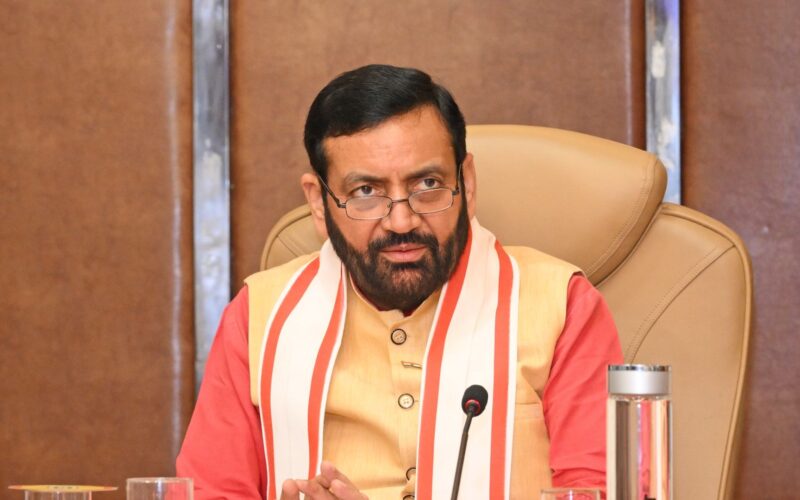
Chandigarh, January 19 — Acting on the directions of Chief Minister Nayab Singh Saini, the Quality Assurance Authority (QAA) has initiated a comprehensive framework to strengthen quality, transparency and accountability in engineering infrastructure projects across Haryana.
Sharing details of the initiative, QAA Chairman Rajiv Arora, a retired IAS officer, said the authority has conducted detailed technical audits of 25 major infrastructure projects across departments in two phases. The audits focused on design adequacy, compliance with Detailed Project Reports (DPRs), construction quality, contract management, safety standards and long-term sustainability.
Based on the findings, detailed audit reports have been submitted to the concerned administrative departments and implementing agencies for compliance and corrective action. QAA has also been tasked with preparing a consolidated report, incorporating Action Taken Reports (ATRs) from departments along with its independent observations and recommendations, by February 16, 2026. The report may include suggestions for action against officials, wherever required, and additional measures to ensure timely completion and high-quality execution of projects.
To enhance transparency, all audit reports will be integrated with the Haryana Engineering Works Portal and the Chief Minister’s Dashboard. The Public Health Engineering Department has been designated as the nodal department for this integration.
Under the new guidelines, appointment of DPR and design consultants has been made mandatory for all greenfield road projects, bridges, flyovers, road overbridges and underbridges, building projects costing ₹5 crore or more, and road upgradation projects costing ₹25 crore or more. For lower-cost projects, standard operating procedures and standard design templates will be developed, with QAA acting as the nodal agency for their finalisation, standardisation and periodic review.
Third-party inspection and monitoring agencies have also been made compulsory for all projects costing ₹5 crore and above to ensure independent quality checks and continuous oversight.
In a major transparency push, QR codes will be installed at all project sites. These will link to dedicated digital pages carrying key information such as DPR summaries, bills of quantities, approved technical specifications, names of contractors, engineers-in-charge and consultants, along with monthly physical and financial progress updates.
The government has also prohibited splitting of projects to ensure holistic planning. Each project will now require a single administrative approval and tender, covering all interlinked components. Officers responsible for preparing and approving tenders will be required to certify that all dependent components have been duly included.
Drainage planning has been made an integral and mandatory part of all DPRs. Departments have been directed to develop standard design templates for urban and rural drainage systems, ensure inter-departmental coordination and promote groundwater recharge through underground recharge wells.
Encroachments along roads, canals and government land will be taken up on priority, with coordinated action involving revenue authorities. Right of Way demarcation for national highways, state highways, major district roads and key irrigation canals will be carried out across the state using GPS or GIS technology and stone pillars.
Going forward, projects will be rated under a QAA-developed scoring system. Projects scoring below 75 will be deemed unsatisfactory, those scoring between 75 and 90 will require corrective measures, while projects scoring above 90 will be considered fully compliant and satisfactory.
QAA has also been entrusted with contributing to policy formulation through a comprehensive bridge maintenance policy, with the Public Works Department (Buildings and Roads) as the nodal department. To ensure sustained quality assurance, QAA will conduct regular audits, integrate quality control wings of engineering departments, deploy young GATE-qualified professionals as Quality Assurance Associates through HKRNL, and organise regular training and capacity-building programmes.
