

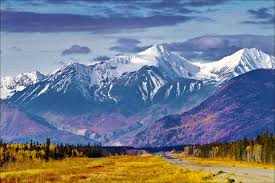
Yukon (Rajeev Sharma): Researchers surveying a remote mountain area in southwest Yukon are examining signs of avalanches and landslides after a powerful earthquake struck near the Alaska–Yukon border last month.
The magnitude 7.0 quake, which occurred on Dec. 6, prompted scientists from the Yukon Geological Survey to launch an aerial reconnaissance using helicopters to assess the earthquake’s surface impacts. Their findings have helped confirm a long-standing geological theory that a previously undetected fault lies beneath the region.
Although both Alaska and the Yukon are known for seismic activity, scientists say the earthquake occurred in an area that has seen little recorded seismic movement in recent decades. That made the event particularly significant for researchers studying tectonic behavior in the region.
Geologists explain that southwestern Yukon sits at a rare and complex junction where two major plate boundary systems intersect at nearly a right angle. This unusual configuration has long puzzled scientists and limited their understanding of how stress is transferred through the Earth’s crust in the area.
For decades, researchers suspected that the major plate boundary along the region must be connected to faults farther inland, but direct evidence had remained elusive. The December earthquake provided the first clear confirmation of that link, offering valuable insight into how seismic forces operate beyond well-known fault lines.
Scientists say the discovery not only advances understanding of northern Canada’s geology but also has broader implications for global earthquake research, drawing interest from the international scientific community.
