

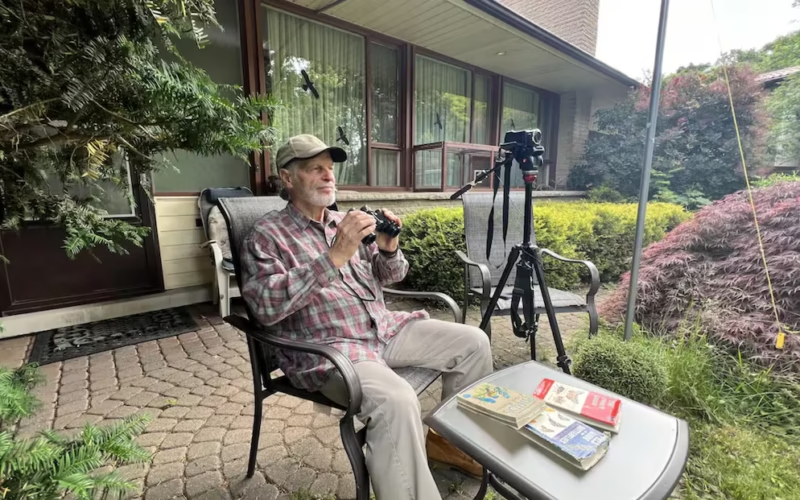
Ontario (Gaganjot Singh): A Mississauga homeowner has won a legal challenge against the city’s weed control bylaw, with the Ontario Superior Court ruling that parts of the regulation violate the constitutional right to freedom of expression.
Wolf Ruck, whose uncut lawn in the Orchard Heights neighbourhood triggered the dispute, successfully argued that the bylaw restricting grass height to 20 centimetres and banning certain plants unjustly limited his ability to express environmental values through natural landscaping. While the court did not award him the $2.46 million in damages he sought, it struck down key provisions of the bylaw as unconstitutional.
Ruck told CBC Radio that his decision to stop mowing parts of his lawn in 2021 was motivated by concerns over biodiversity loss and climate change. He said his property was not neglected, but designed with mowed pathways surrounding patches of natural growth to support pollinators and native plants.
The city began enforcement action after receiving multiple complaints from neighbours between 2021 and 2023. Municipal officers eventually cut the grass, removed what the city classified as nuisance weeds, and added the cost of the work to Ruck’s property tax bill. Ruck challenged these actions in court, arguing they infringed on his expressive freedom.
In her ruling, Justice M.T. Doi held that the impact of the bylaw on freedom of expression was “relatively serious.” She noted that the city failed to provide evidence showing how a strict grass-height limit or the removal of listed weeds was necessary to protect public health, safety, or ecological balance in urban areas.
The court rejected the city’s argument that similar bylaws exist in other municipalities, stating that Mississauga was required to demonstrate it had explored less restrictive alternatives. “It is not sufficient to say, ‘we are doing what everyone else is doing,’” the judgment noted.
Legal experts say the ruling could have broader implications. John Mather, a lawyer with the Canadian Constitution Foundation, which intervened in the case, said the decision effectively renders the current bylaw unenforceable. He added that municipalities must now support such regulations with clear evidence and balance them against individual rights.
The City of Mississauga said it is reviewing the judgment and considering its next steps. Meanwhile, Ruck acknowledged that the dispute strained relations with some neighbours but said he hopes the ruling will encourage cities to rethink rigid lawn regulations and recognise alternative, eco-friendly landscaping practices.
