

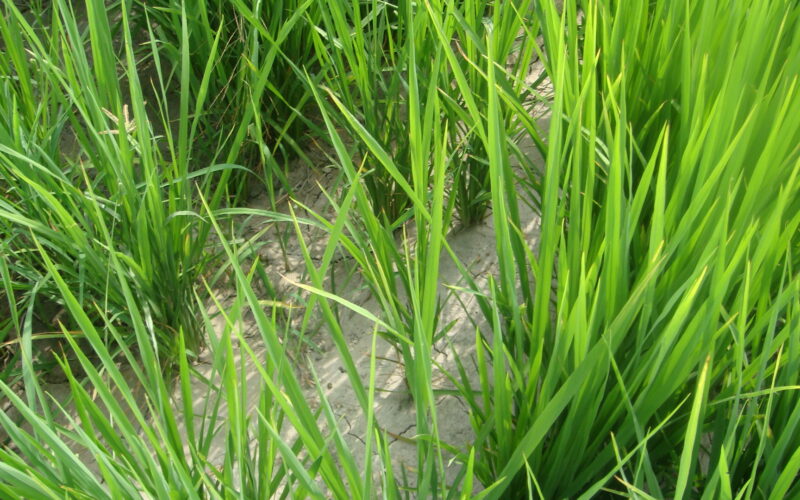
Chandigarh (Gurpreet Singh/Rajeev Sharma): India’s rise to the top of global rice production has been hailed as a major agricultural achievement, reinforcing the country’s status as a food powerhouse and the world’s biggest rice exporter. Exports have climbed steadily over the past decade, crossing 20 million tonnes in the last financial year and supplying markets across Asia, Africa and the Middle East.
Yet in the fields of Punjab and Haryana—states that form the backbone of this success—the mood is far from triumphant. Many farmers say the very policies that helped India dominate rice production are now pushing them into financial and environmental distress.
At the centre of the problem is groundwater. Rice cultivation in northern India depends overwhelmingly on underground water, unlike other regions that rely more on rivers and canals. Over the years, relentless pumping has caused water tables to plunge, forcing farmers to invest more money each season just to keep their crops alive.
Farmers across both states recall a time when water could be accessed at shallow depths. Today, wells often need to be drilled several times deeper. Official records and academic studies confirm that groundwater depletion has accelerated, particularly in the past five years, with many districts now classified as severely stressed.
“It’s not the same farming anymore,” said a Haryana-based farmer who has been growing rice for decades. “Earlier, water was easy to find. Now, we spend huge amounts just to reach it.”
Government support systems have played a key role in shaping this situation. Rice benefits from a guaranteed minimum price, which has increased substantially over the years, along with subsidised electricity that reduces the cost of running pumps. These measures were designed to ensure food security when India faced shortages, but critics argue they now discourage farmers from switching to crops that require less water.
As a result, India—already among the world’s most water-scarce countries—continues to promote a crop that demands extraordinary amounts of water. Agricultural economists estimate that rice grown in India consumes significantly more water per kilogram than the global average.
The financial burden of falling water levels is not shared equally. Larger farmers, with greater access to capital, can afford deeper borewells and powerful motors. Small and marginal farmers, who form the majority, are far more vulnerable. Rising costs for drilling, equipment and fuel quickly erode their earnings.
In some areas, authorities have tried to slow the crisis by banning new borewells in zones where groundwater is critically depleted. While this has limited further expansion, it has also left many farmers dependent on ageing wells that are increasingly expensive to maintain.
Despite healthy monsoon rains in recent years, extraction continues to exceed natural recharge. Government data show that Punjab and Haryana withdraw far more groundwater annually than nature can restore, raising concerns about the long-term viability of agriculture in the region.
The stakes extend well beyond India’s borders. With roughly 40% of global rice exports coming from India, any disruption to its production could ripple through international food markets. At the same time, India already produces more rice than required for domestic consumption, even as its population—now the world’s largest—continues to grow.
This contradiction has sparked debate among policymakers and researchers about whether the current emphasis on rice is sustainable. Some states have begun promoting alternatives such as millets, which need far less water and are gaining popularity among health-conscious consumers.
Haryana has introduced financial incentives to encourage farmers to try these crops, but uptake has been limited. Farmers say short-term incentives do not provide enough security to abandon rice, which benefits from assured procurement and pricing.
Experts argue that a longer-term approach is needed. Redirecting a portion of existing subsidies toward less water-intensive crops could protect farmer incomes while easing pressure on groundwater reserves. In the long run, such changes could also reduce government spending on power and fertiliser subsidies.
Many farmers say they are willing to adapt if the policy environment changes. “We can grow other crops,” said a Punjab farmer. “But without guaranteed prices and buyers, the risk is too high.”
India’s position as the world’s leading rice producer may be a source of national pride, but in its northern heartland, the achievement is increasingly overshadowed by emptying aquifers and rising costs—warning signs that the current model may not hold forever.
