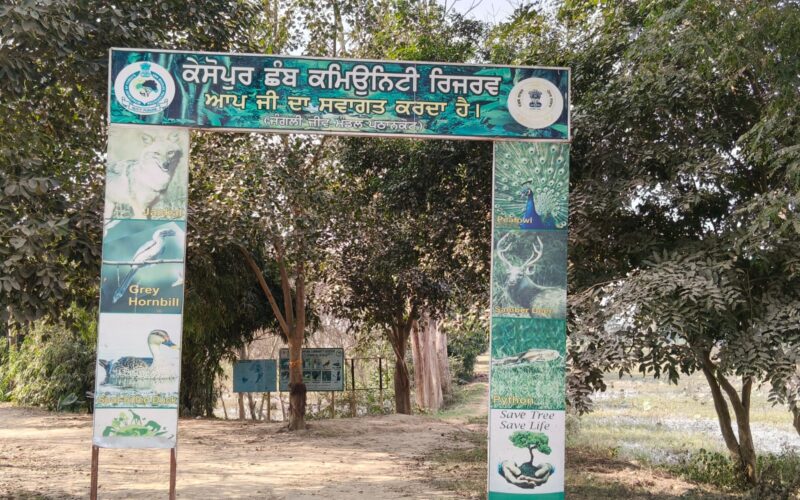
Pathankot, November 30, 2025: Keshopur Chhamb, India’s largest habitat for migratory birds and officially known as the Keshopur–Miani Community Reserve, is fighting for its existence despite its ecological importance. Once announced as an international-level tourist destination in 2015–16 with an investment of ₹9 crore by the Tourism Department, the wetland today shows signs of severe neglect.
Recognised as the country’s first notified community reserve under the Wildlife Protection Act, 1972 (amended in 2002), Keshopur Chhamb spans nearly 850 acres of natural freshwater wetlands. It is a crucial winter refuge for migratory waterbirds and forms an essential part of the migratory bird corridor. The reserve includes two major wetlands owned collectively by five village panchayats—Miani (400 acres), Dalla (152 acres), Keshopur (136 acres), Matwa (51 acres) and an isolated patch at Magarmudian (111 acres). The area was declared a community reserve by the Punjab Government in June 2007, with its management overseen by a community reserve committee representing all five villages and a forest range officer as member secretary.
However, the ground reality tells a different story. The infrastructure developed with government funds now appears wasted. Neglect, lack of maintenance and absence of regular committee meetings have left the reserve struggling. Panchayats say they were never consulted despite the land belonging to them.
Only around 2,000 migratory birds have arrived so far this season, mainly from Siberia and Central Asia, though the number is expected to rise to 15,000 by late December. Species seen here include the Northern Shoveler, Sarus Crane, Open-billed Stork, Spot-billed Duck, Northern Pintail, Mallard, Common Pochard, Great Cormorant, Little Cormorant, Eurasian Teal, Bar-headed Goose, Greylag Goose, Little Grebe, Stilt, Black Coot, Common Moorhen, Purple Swamphen and Glossy Ibis. These birds travel nearly 3,000 to 4,000 kilometres each winter and return in March.
Former Tourism Minister Navjot Singh Sidhu had announced in 2018 that an international photography competition would be held annually at the wetland, inviting global nature channels like Discovery, National Geographic and Animal Planet. A ₹5 crore tourism interpretation centre was also promised. However, not a single competition has been organised to date, and the centre remains incomplete. Even the roads that were sanctioned for repair soon fell prey to encroachments and official apathy after Sidhu left office.
On the ground, two of the three watchtowers built for tourists are in a dilapidated condition and unsafe for use. The rooms below them are poorly maintained. The tower at Magarmudian has never been used. Overgrown reeds along the paths reflect the lack of upkeep.
Forest guard Manvir Singh said the reserve receives no special grants, and the six to seven staff members working there have been temporary for years. They handle bird protection, cleaning and all maintenance work. Last year, funds from the Deputy Commissioner helped repair one tower, and repairs for the remaining two are yet to begin. He said the wetland requires more staff and consistent funding. A gallery has been set up at the Keshopur Chhamb office to provide information about the reserve, and school students often visit, but inadequate facilities limit their experience.
If the situation continues, experts fear that this historic site—once a hunting ground for Maharaja Ranjit Singh—may lose its ecological identity. With little government attention and insufficient support, Keshopur Chhamb stands at a critical juncture, hoping for timely intervention.
India’s Largest Migratory Bird Habitat, Keshopur Chhamb, Struggles for Survival Amid Neglect
 0 Comments