

Shimla (Rajeev Sharma): A new report by the United Nations Development Programme (UNDP) has sounded the alarm for Himachal Pradesh, warning that the state could experience a temperature rise of up to 3°C by 2050, alongside increasingly unpredictable rainfall and faster glacial retreat. The findings, part of the Himachal Pradesh Human Development Report 2025, paint a worrying picture of how climate change could reshape the state’s economy, ecology, and way of life.
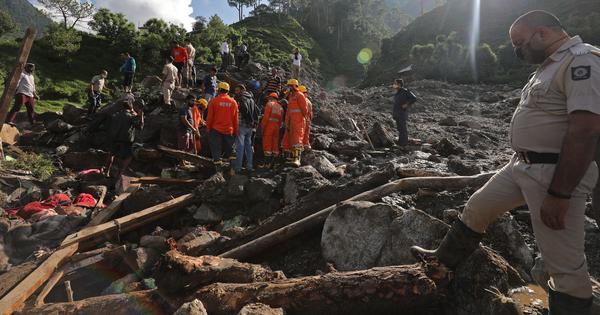
The report notes that the effects of a changing climate are already visible — from cloudbursts and shifting monsoon cycles to rising forest fires and erratic snowfall. Despite an average 1.5°C temperature drop since 1901, the intensity and frequency of extreme weather events have spiked sharply. In the past five years alone, natural disasters have inflicted losses worth ₹46,000 crore, a figure that underscores the scale of the crisis.
One of the starkest indicators of stress is the explosion in fire alerts, which have multiplied from just over 700 in 2022–23 to more than 10,000 in 2023–24, reflecting both rising heat and declining moisture levels. The report also warns that seven out of every ten traditional water sources in the state are now threatened, endangering rural communities that depend on them.
Development Under Pressure
The UNDP assessment evaluates Himachal’s situation across five critical areas — agriculture, water and forestry, tourism and construction, public health, and governance. While the state performs strongly on development indicators — boasting a Human Development Index (HDI) of 0.78 compared to the national average of 0.63, and ranking among the top five states in India’s SDG Index 2023–24 — the report warns that unchecked climate risks could reverse many of these gains.
Tourism and Construction: Growth at a Cost
Tourism, which contributes around 7.8% to Himachal’s GSDP, is particularly exposed. Declining snowfall and increasingly unpredictable weather are reducing tourist arrivals and straining livelihoods dependent on the industry. The report also flags the growing use of diesel-powered vehicles and machinery, particularly in the tourism and construction sectors, which is amplifying emissions despite rising fuel costs.
Unplanned development and unregulated tourism infrastructure have intensified deforestation and waste accumulation, while hydropower expansion and weak urban planning have disrupted fragile mountain ecosystems. Together, construction and tourism now employ about a quarter of the state’s workforce, making the challenge of balancing economic growth with environmental sustainability even more complex.
Rising Health Threats
The changing climate is also taking a toll on public health. The report points to a growing incidence of vector- and water-borne diseases, including dengue, diarrhoea, and typhoid, linked to warming temperatures and erratic rainfall patterns. Such trends, it cautions, may worsen without stronger disease surveillance and preventive health systems.
Call for Policy Reform and Climate Resilience
To counter these growing threats, the UNDP recommends integrating climate priorities into state budgets and gradually eliminating subsidies for polluting activities. It urges policymakers to channel financial resources towards low-carbon and climate-resilient development, ensuring that environmental sustainability becomes central to future growth plans.
“Himachal has taken notable steps towards mainstreaming climate action,” the report acknowledges. “However, to secure a sustainable future, the focus must now shift toward resilience, equity, and environmental stewardship.”
As one of India’s most environmentally sensitive states, Himachal Pradesh stands at a turning point. The UNDP report serves as both a warning and a guide — reminding the state that its development path must now align with the realities of a rapidly changing climate.
