

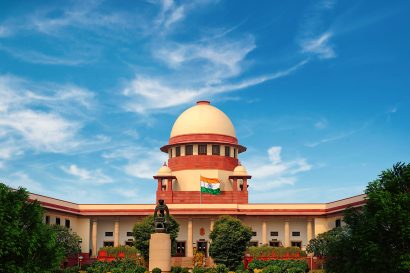
New Delhi (National Times): The Supreme Court of India today issued a notice to the 12 accused acquitted in the 2006 Mumbai train bombings, following an appeal filed by the State of Maharashtra challenging the Bombay High Court’s landmark decision that overturned all convictions in the case.
Appearing on behalf of the State, Solicitor General Tushar Mehta clarified before the bench of Justice MM Sundresh and Justice NK Singh that the government was not demanding the re-arrest or surrender of the acquitted individuals, who were released from prison post the High Court judgment. However, he sought a partial stay on the ruling, citing that the observations made in the High Court’s judgment could adversely influence other pending cases under the Maharashtra Control of Organised Crimes Act (MCOCA).
SG Mehta requested the apex court to stay the judgment as precedent, while allowing the acquitted individuals to remain free. “Your lordships may consider saying, the judgment is stayed; however, they will not be required to come back to the prison,” he submitted.
The Supreme Court, in its order, acknowledged the state’s concern and noted:
“We have been informed that all the respondents have been released and there is no question of bringing them back to the prison. However, taking note of the submission made by the Solicitor General on the question of law, we are inclined to hold that the impugned judgment shall not be treated as a precedent. To that extent, there is a stay of the impugned judgment.”
Background: The 7/11 Mumbai Train Blasts
The appeal comes in the wake of the Bombay High Court’s July 21 verdict, which set aside the conviction of all 12 accused in the July 11, 2006 serial train blasts that struck Mumbai’s Western Railway line. The bombings claimed 189 lives and left over 820 injured, marking one of the deadliest terror attacks in India’s history.
A special MCOCA court had earlier handed down death sentences to five of the accused and life imprisonment to seven others for their alleged roles in planning and executing the coordinated bombings.
However, the High Court bench of Justice Anil Kilor and Justice Shyam Chandak ruled that the Maharashtra Anti-Terrorism Squad (ATS) had failed to establish guilt beyond reasonable doubt, and highlighted allegations that the accused were tortured during custody under pressure to produce results.
Those earlier sentenced to death—Kamal Ansari, Mohammad Faisal Ataur Rahman Shaikh, Ehtesham Qutubuddin Siddiqui, Naveed Hussain Khan, and Asif Khan—were alleged to have planted the bombs. The others—Tanveer Ahmed, Mohammed Majid Shafi, Mohammed Ali Alam Shaikh, Mohammed Sajid Margub Ansari, Muzammil Rahman Shaikh, Suhail Mehmood Shaikh, and Zameer Ahmed Shaikh—had been given life terms.
What Next?
With the Supreme Court’s latest order, while the acquitted individuals remain free, the High Court’s findings cannot be cited as precedent in related or future MCOCA trials. The matter will continue to be heard as the State of Maharashtra pursues its appeal.
The case continues to stir public debate, with many calling for a re-evaluation of India’s investigative and legal procedures in high-profile terror cases.
