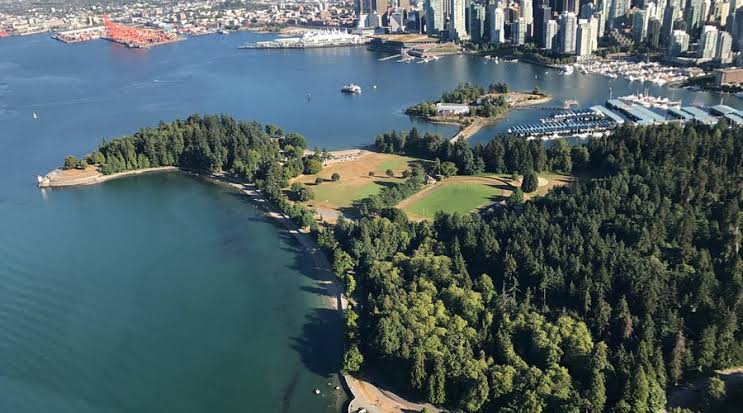
Vancouver (Richa Walia) — The Vancouver Park Board is preparing to move forward with the final stage of a large-scale tree removal operation in Stanley Park, following years of ecological damage caused by a persistent Western hemlock looper moth infestation. The infestation, first identified in 2020, has severely impacted nearly one-third of the park’s estimated 600,000 to 700,000 trees. So far, more than 11,000 trees have been removed since active mitigation work began in mid-2023.
Officials say the removals are necessary to protect public safety. Many of the dead or dying trees pose a significant risk of falling and have heightened concerns around fire hazards. Despite opposition from environmental groups and a failed lawsuit aimed at halting the operation, the Park Board maintains that the intervention is essential. The upcoming phase will target around 111 hectares of the park, primarily in interior forest areas that include Lees Trail, Lovers Walk, Tatlow Walk, and the trails surrounding Beaver Lake.
Park Board staff recommend the creation of 40-metre buffer zones around these key trails, where dangerous trees will be systematically removed. This approach is designed to reduce the threat to visitors while allowing the forest’s natural regeneration to continue in non-critical areas. Broader removal plans were considered but ultimately rejected due to their higher cost and greater environmental impact. Staff have emphasized that natural regrowth will be monitored over time and may require supplemental replanting, depending on how the forest responds.
Earlier phases of the operation addressed high-traffic corridors such as Stanley Park Drive and the seawall. These sections have already undergone tree removal to prevent injuries and ensure fire safety. To date, over $18 million has been spent on the project. The final phase alone is expected to cost more than $3 million and, if approved, will begin later this year with completion slated for the first quarter of 2027.
The Vancouver Park Board commissioners will vote on the proposal at a scheduled meeting Monday evening. Their decision will determine whether the final removal plan proceeds as outlined, marking the end of one of the most extensive forestry interventions in the park’s history.
Massive Tree Removal in Stanley Park Enters Final Phase Amid Looper Moth Infestation
 0 Comments